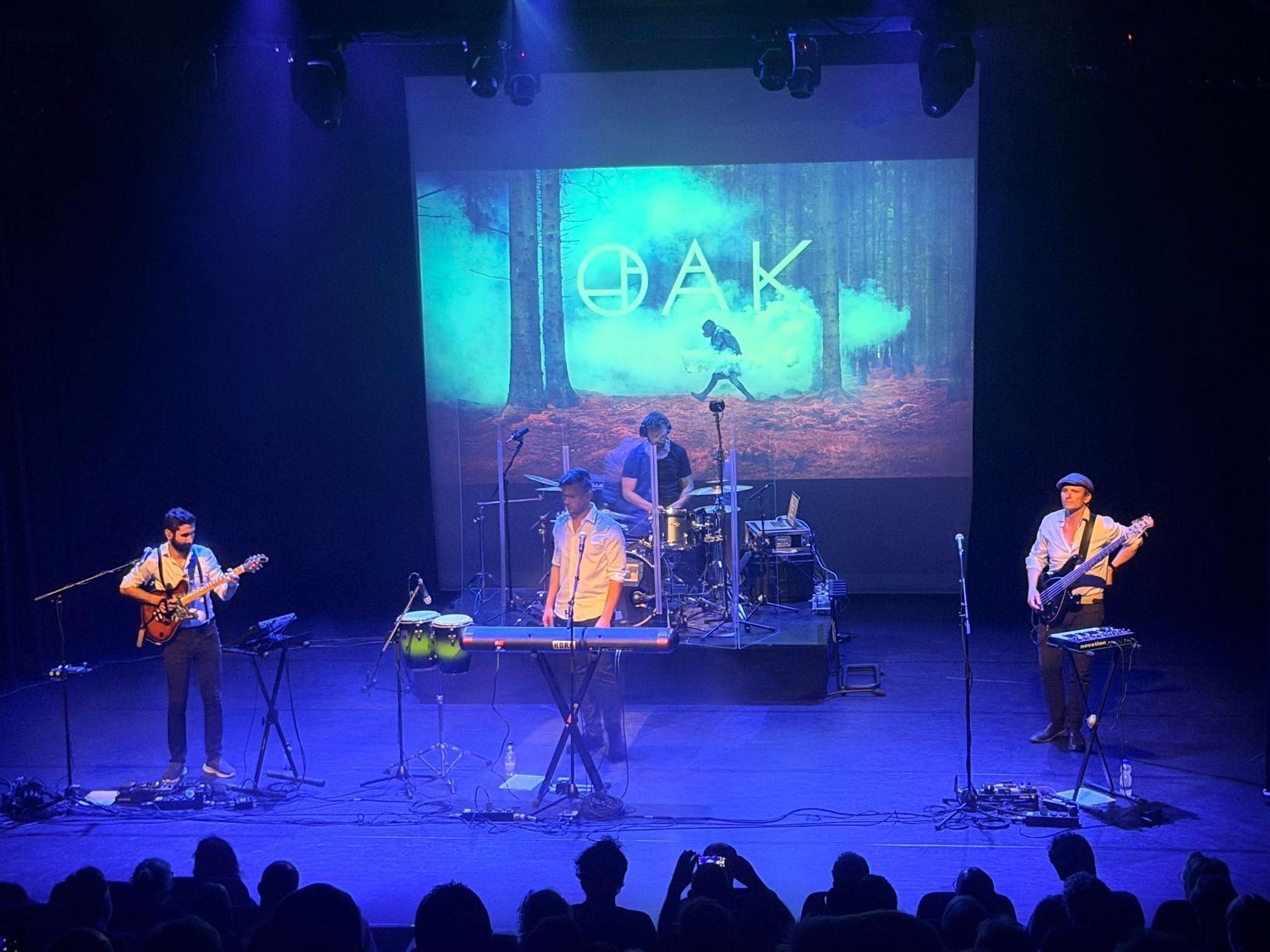

Simen Valldal Johannessen (OAK)
Simen Valldal Johannessen (OAK): On Musical Roots, Deep Lyrics, and Secret Morse Code
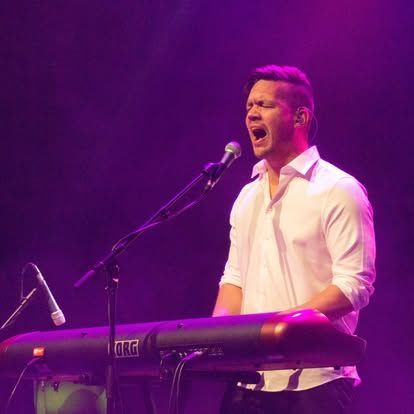
Arne: I absolutely loved your performance at the ParkVilla Theater in Alphen a/d Rijn. It was a fantastic concert. I didn't know Oak before, I did know the name, not the music,—which is pretty stupid on my part, to be honest!
Simen: It's really not that weird. We simply need to do more promotion and play more shows abroad.
Arne: You're the lead singer and keyboard player for Oak. Could you introduce yourself briefly?
Simen: As far as my musical background goes, I started playing classical piano when I was around five years old. When I was eight or nine, I joined the Norwegian Broadcasting Boys' Choir. It made for a very musical childhood, and through the choir, we sometimes got small boy roles in operas and went on tour to Germany, Poland, and England.
I kept playing classical piano at a fairly high level until my teenage years. In high school, I met the bass player who would later join me in Oak. Up until then, I had listened to rock, but I hadn't played any. That period was really my first hands-on encounter with rock music—just playing covers and fooling around.
Arne: You went on to study at the music conservatory, right? And church music as well?
Simen: Yes. Pianists face a common problem: in a full orchestra, there's room for eighteen violinists, but usually only one pianist. Because of that, many pianists end up playing in churches. A few years after graduating, I started playing the organ. I was advised that if I wanted a stable, full-time job in music, I should formally study church music on the side. So I spent a couple of years studying choir conducting, organ, Bible history—everything required for a cantor role.
Arne: Do you still work in that field today? And are you a full-time professional musician?
Simen: It’s still part of my workload—maybe 30 to 40 percent. At one point in my career, I was doing music full-time and holding down five different jobs at once, which became overwhelming. Now I have a regular day job alongside music. You reach a stage where you buy a house and raise kids, so a steady income is important.
The current balance is ideal: I play organ in church, and I also play keyboards for Airbag, another Norwegian prog band. That gives me a great musical outlet.
Arne: What is your day job?
Simen: I work with children and youth. I manage six activity centers that organize part-time and holiday activities and provide free sports equipment for kids. I handle the personnel and financial management.
Arne: Does having a handle on finance help when running a band?
Simen: Absolutely. Managing the day-to-day band finances is my domain, though we also get a lot of support from our label, Karisma Records.
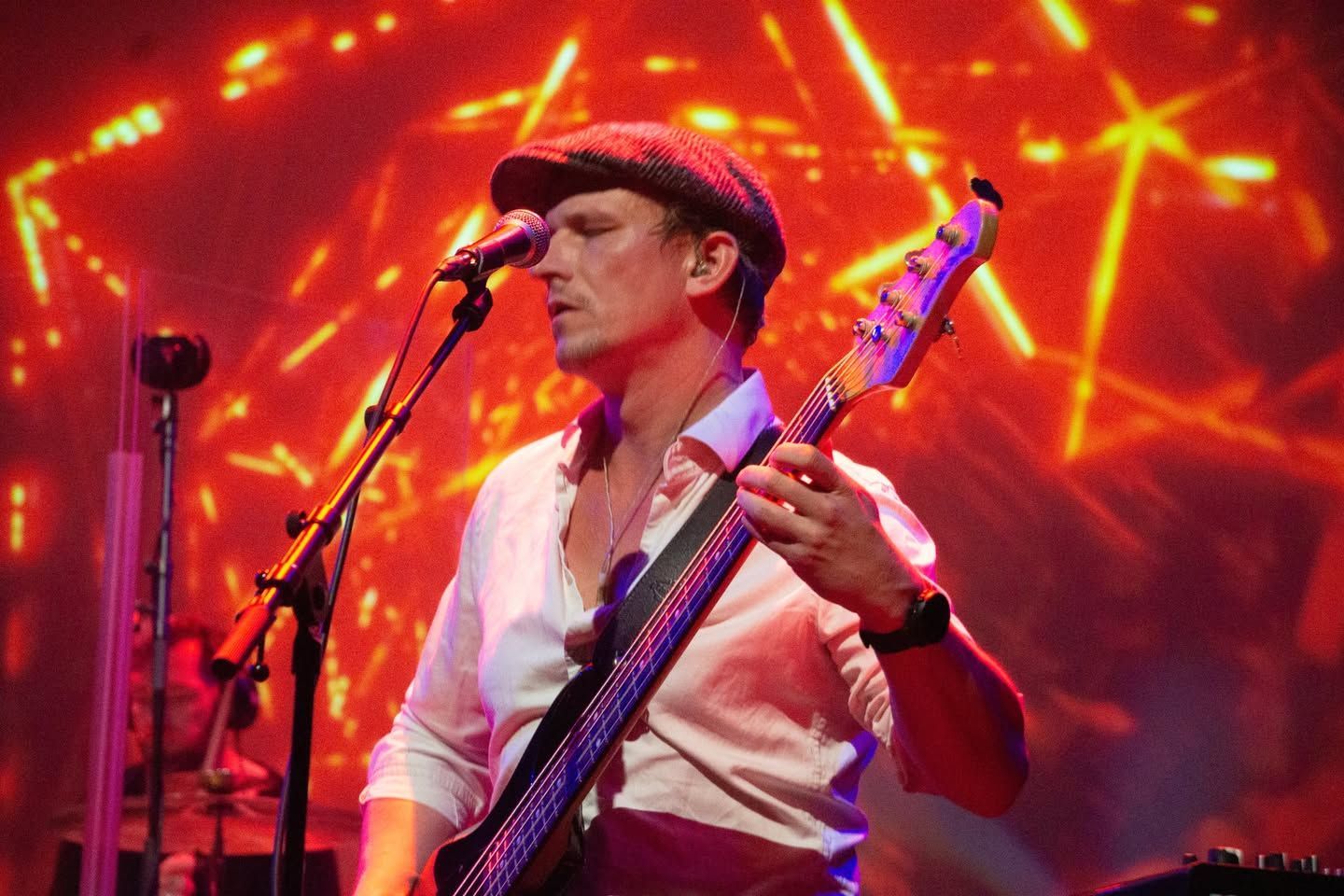
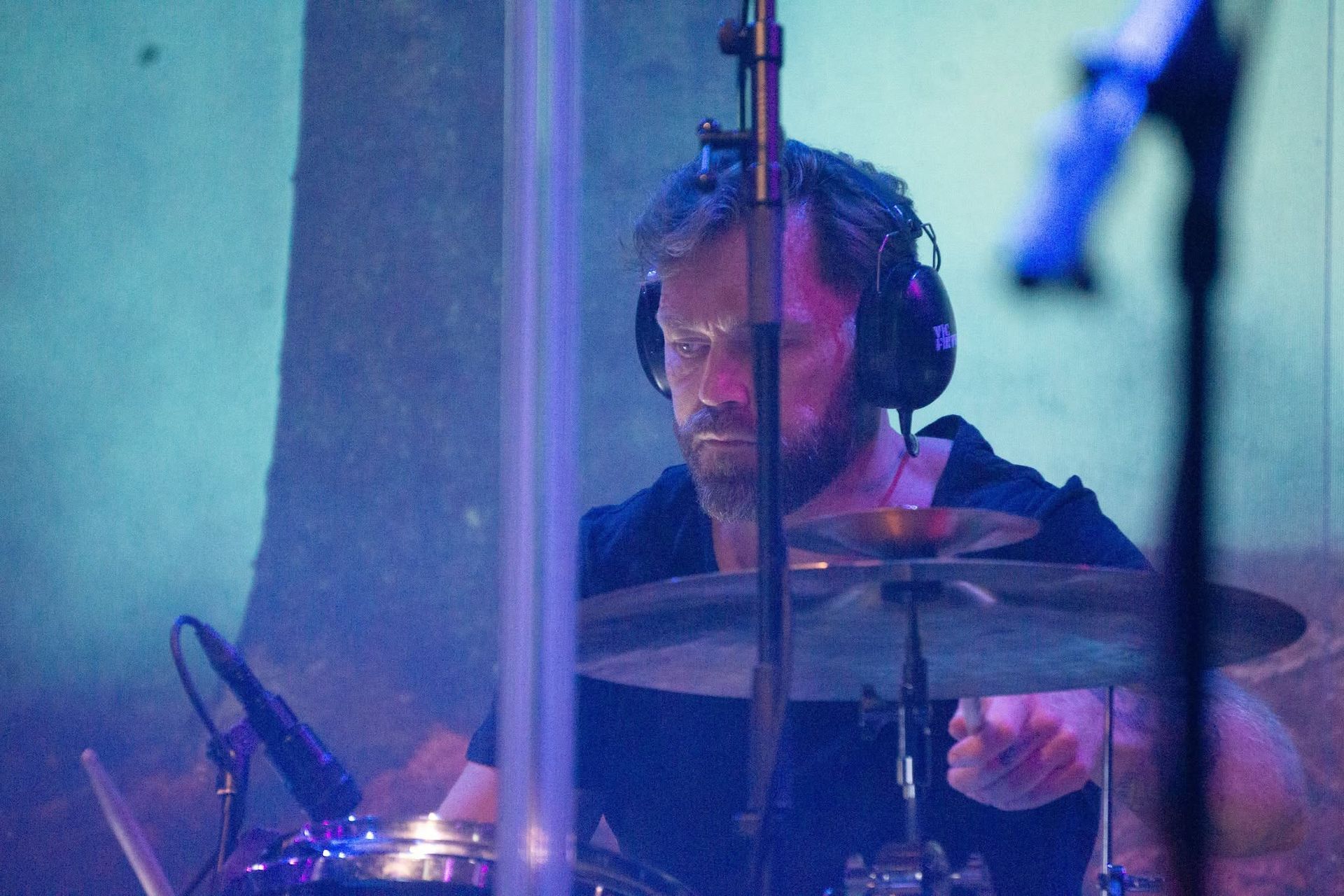
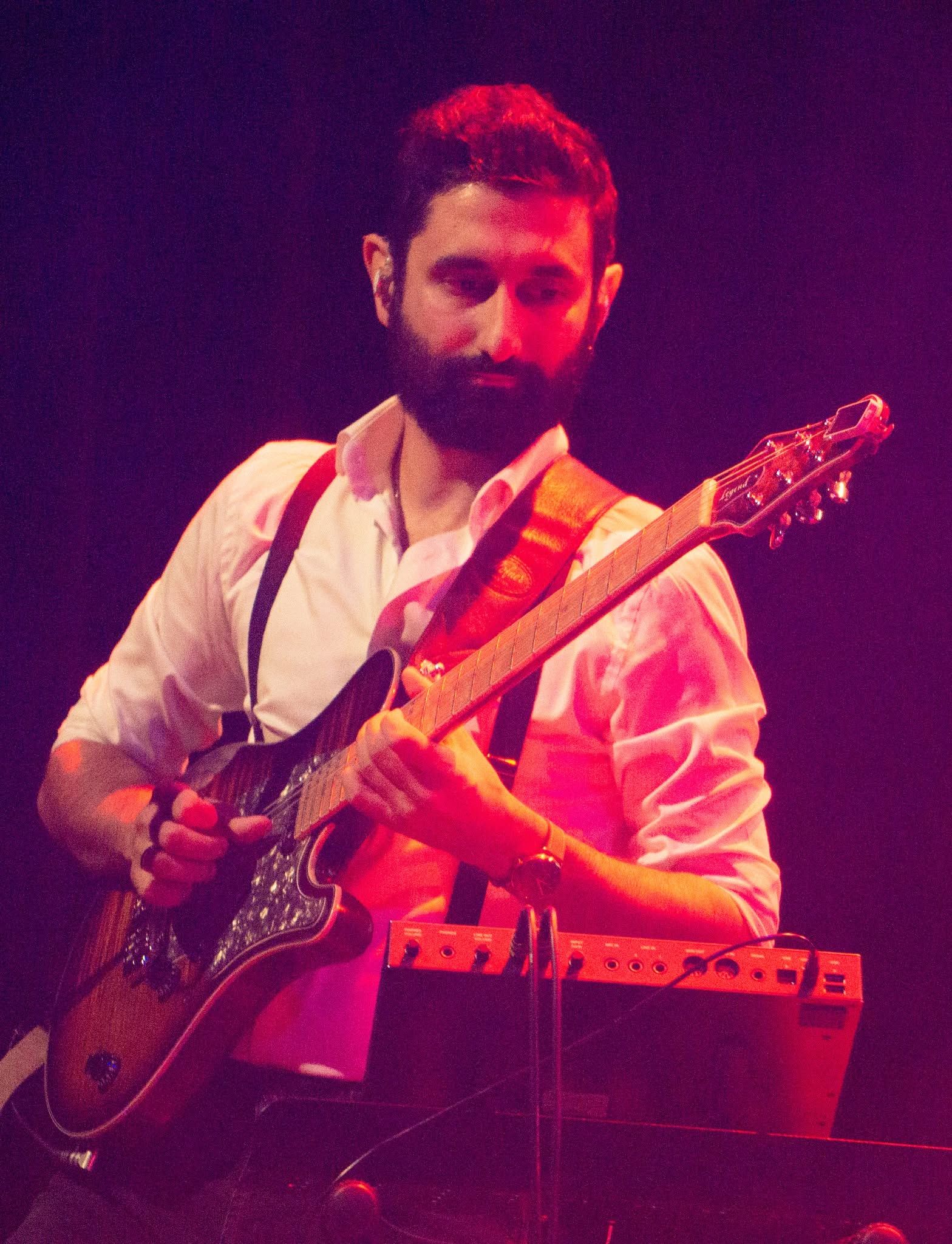
Arne: Oak started as a trio and is now a four-piece band. How did that transition happen?
Simen: We've had a few lineup changes in the guitar position over the years. The core team—our drummer Sigbjørn (Reiakvam), bassist Øystein (Sootholtet) and myself—has been writing music together since around 2009 or 2010. The previous guitarists stayed with us for several years each, so it wasn't overly unstable, but we wanted to try a different dynamic this time. Milad (Amouzegar) has been a very welcome addition. We're starting work on our next album now, and he’s going to play a big part in it. He's a brilliant guitarist, has great stage presence, and he's ten years younger than us, which keeps us on our toes!
Arne: Your music is very rich and layered. How does your songwriting process work? Do you jam together or start with home demos?
Simen: Up until now, Øystein or I will usually come up with an initial idea that’s already structured with verses and choruses. We bring that idea to our rehearsal studio in central Oslo, where twe flesh out the song together. After that, I take it home to write and record the lyrics and vocals. Finally, we add all the subtle details and "spices." Once we have a refined demo, we enter the official recording phase for the final polish.
Arne: Your lyrics touch on heavy themes, including mental health. Do you write all of them yourself?
Simen: Yes, that's my responsibility. Writing lyrics is quite therapeutic for me. It's a delicate balance: I want the lyrics to be accessible without slipping into cliches, but also avoid making them overly vague or pretentious.
Mental health is a recurring thread across all our albums. Some lyrics are essentially transcribed dreams. While I prefer not to write directly about current news events, they inevitably influence the work. I try to translate those impressions into something timeless. Human experiences tend to move in cycles, so whether you're looking at events from today or a thousand years ago, the underlying human psychology remains universal.
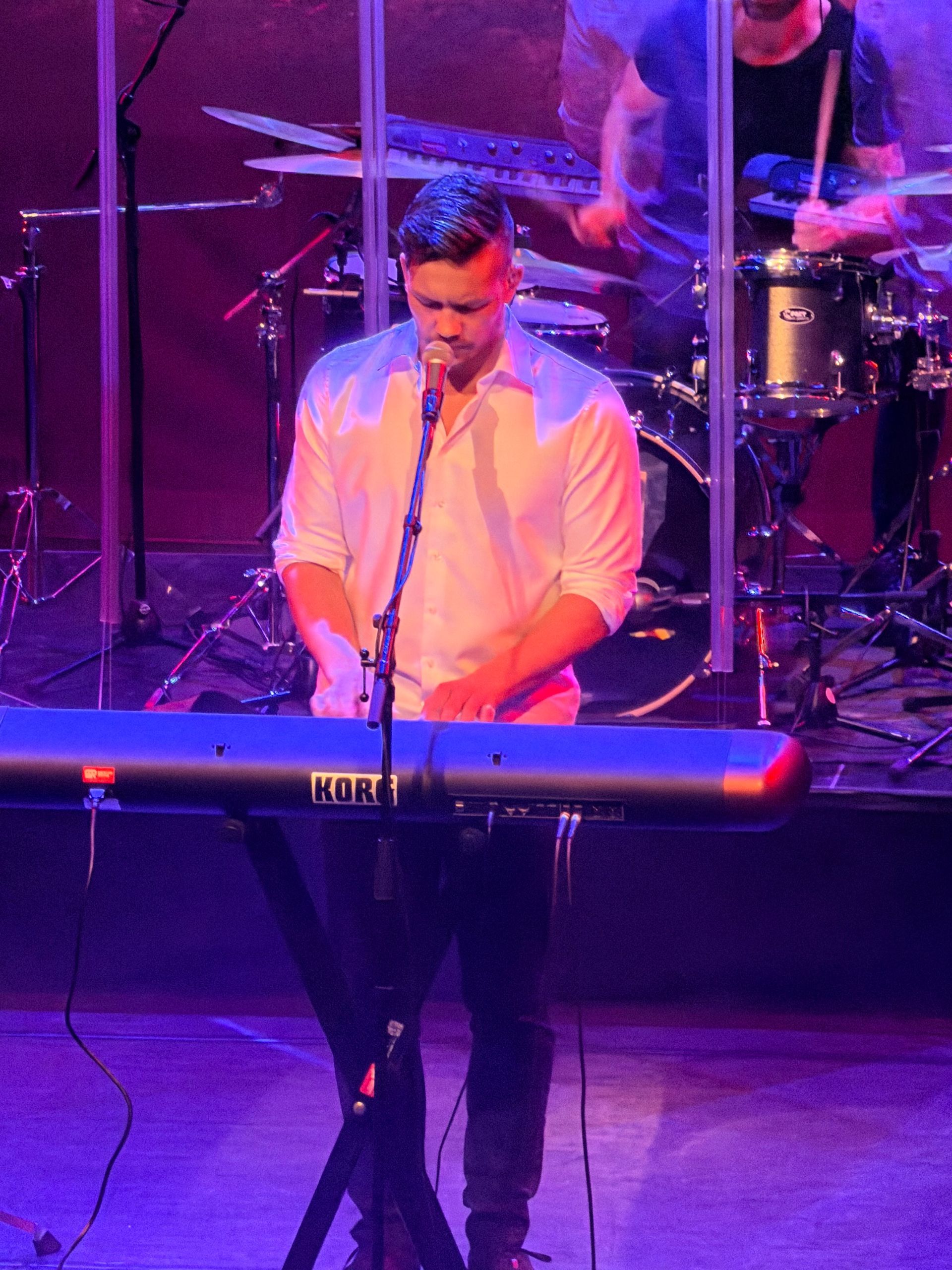
Arne: As a fellow gear enthusiast, I noticed you play a Korg on stage. Is that your main keyboard?
Simen: Yes, I've been using the Korg Stage Vintage 1 for about ten or fifteen years. I'm not overly technical, so spending hours programming complex patches on a Nord isn't really my style. Since I'm singing lead vocals at the same time, I need an intuitive setup where I can quickly switch presets with the press of a button.
I'm also very particular about key action, and I find the feel of the Korg superior to Nord instruments. The built-in sounds, especially the organ patches, have a wonderful depth. It's not a synthesizer with endless parameters, but for what I need live, it's perfect.
I also keep a few older instruments at home that need some restoration, including a vintage Dutch Philips Philicorda—one of the larger models equipped with two manuals and foot pedals, very much like a home church organ.
Arne: What are the upcoming plans for the band? You mentioned a new record?
Simen: Recording for the new album is right around the corner. We're also booking more live dates. We have a show lined up in Oslo on January 15th, and the following weekend we're returning to the Netherlands to perform with Bjørn Riis's solo band, playing at De Boerderij and De Cacaofabriek.
Arne: De Cacaofabriek isn't far from where I live, so I'll definitely try to make it!
Simen: That's great! We’ll likely test out a few new songs or at least perform tracks that weren't in our previous setlist.
Our main priority right now is finding a new booking agency so we can secure more European festival slots. We've toured North America a couple of times, but we want to build a more consistent touring schedule in Europe, which requires the right team behind us.
Arne: Where do you hope to see Oak in five years?
Simen: I hope the band can become a sustainable part-time career and reach a much broader audience. The potential is there; it really comes down to marketing and connecting with the right people. None of us are particularly fond of managing social media, so we have to take some responsibility for our slow growth there! We enjoy connecting with people, but we aren't consistent online. We could definitely benefit from working with someone more business-minded in that area.
Arne: If you could sit down for a coffee or collaborate in the studio with any musician, living or dead, who would it be?
Simen: David Bowie, without question. On the classical side, Claude Debussy.
As for a contemporary artist that might actually be realistic—given that we've worked with the same producer—I'd love to sit down with Mikael Åkerfeldt from Opeth. He seems like a genuinely fun guy to talk music with.
Arne: What's the strangest or funniest thing that has happened to you on stage or in the studio?
Simen: Weird things don't happen to us on stage all that often, but we do get creative in the studio. We often pick up random objects lying around the room and sample them to create unusual textures.
In fact, I can share a little secret: on our debut album, Lighthouse, there is Morse code hidden both visually and in the audio. The album itself is very dark and serious, but as an insider joke, the band coded a message into the tracks. Nobody has picked up on it yet, but it decodes to something along the lines of: "Simen is only in this band to get laid." If you know Morse code, it's actually in there!
Even though our music deals with serious themes, it's essential not to take ourselves too seriously as individuals.
Arne: That’s brilliant! To wrap up, do you have any hidden gems—bands, books, or films—that you think readers should check out?
Simen: Musically, I always recommend Norwegian singer-songwriter Susanne Sundfør. Her work borders on progressive music at times. Her self-titled debut album is phenomenal—very piano-driven in the vein of Tori Amos or Joni Mitchell—and her album The Brothel is an absolute masterpiece.
For books, two titles stand out for me:
- The Master and Margarita by Mikhail Bulgakov. It’s wonderfully weird and was a massive creative inspiration for me.
- East of Eden by John Steinbeck. A timeless classic.
Arne: Excellent recommendations. Thank you so much for taking the time to chat, Simen!
Simen: Thank you, Arne. Let's stay in touch!
(Thanks to Marin Snijders for the photo's)