
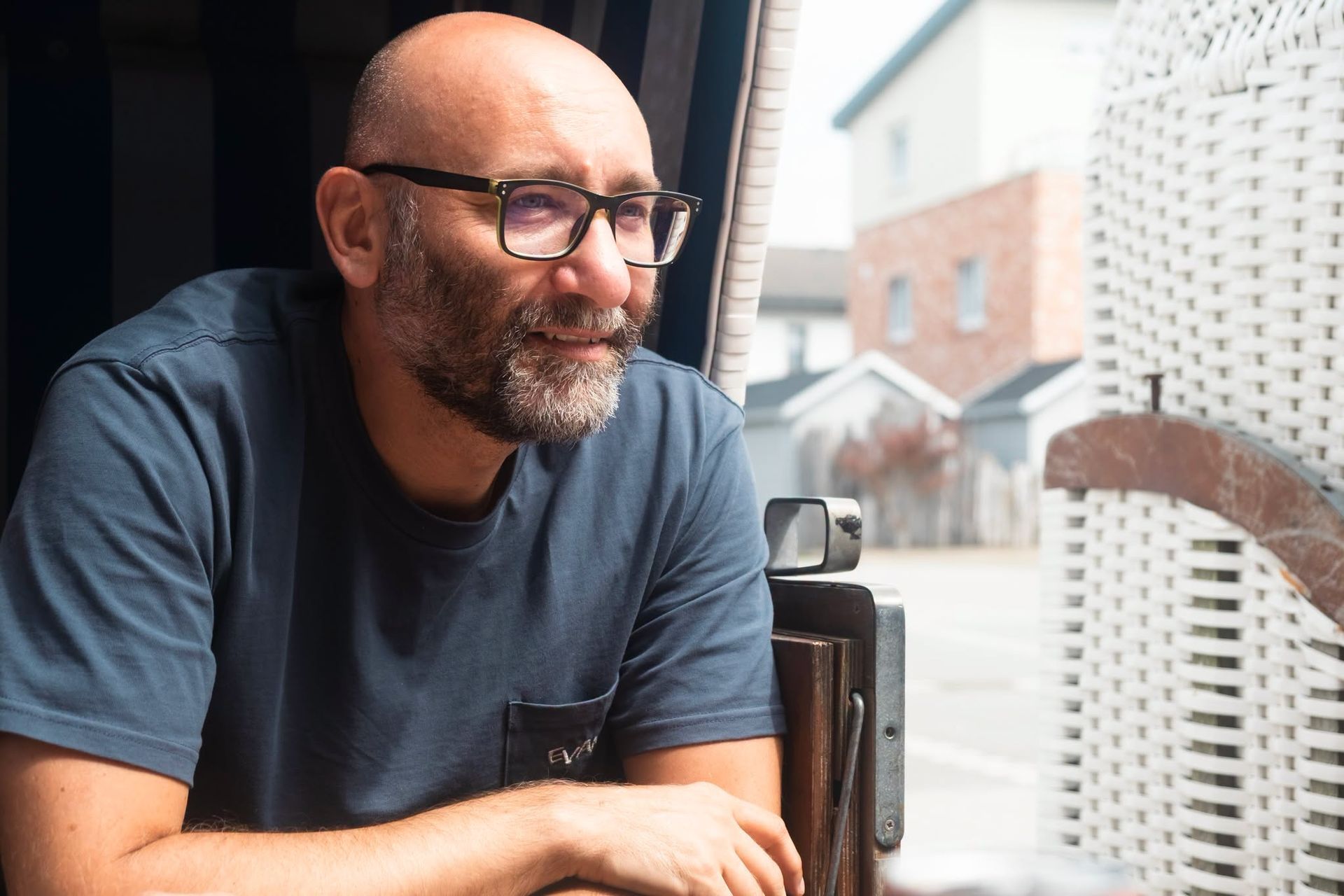
Sergio Ponti
An Italian drummer in Romania. A real Drummers Drummer!
Sergio Ponti - a Drummers Drummer
Italian born
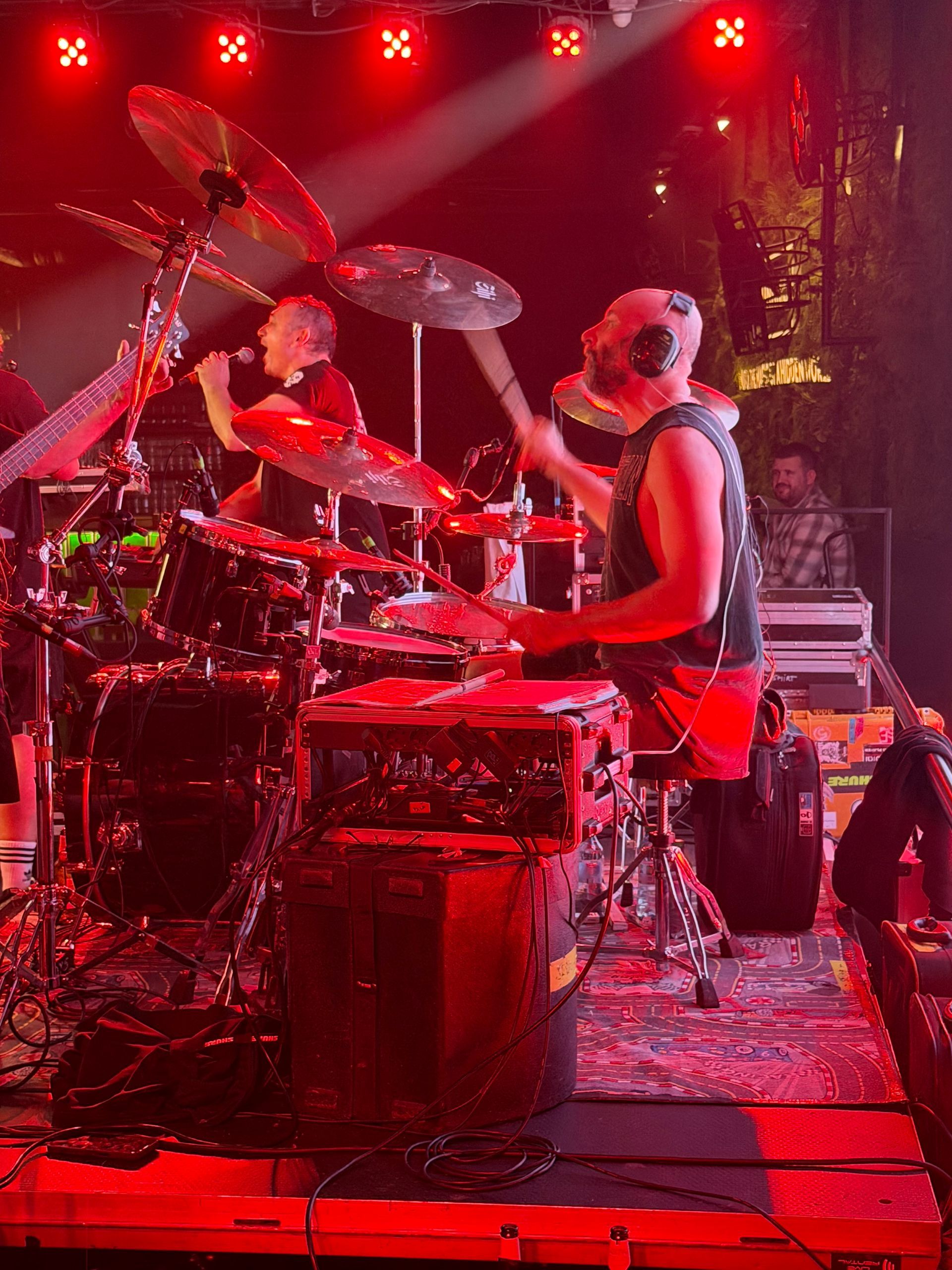
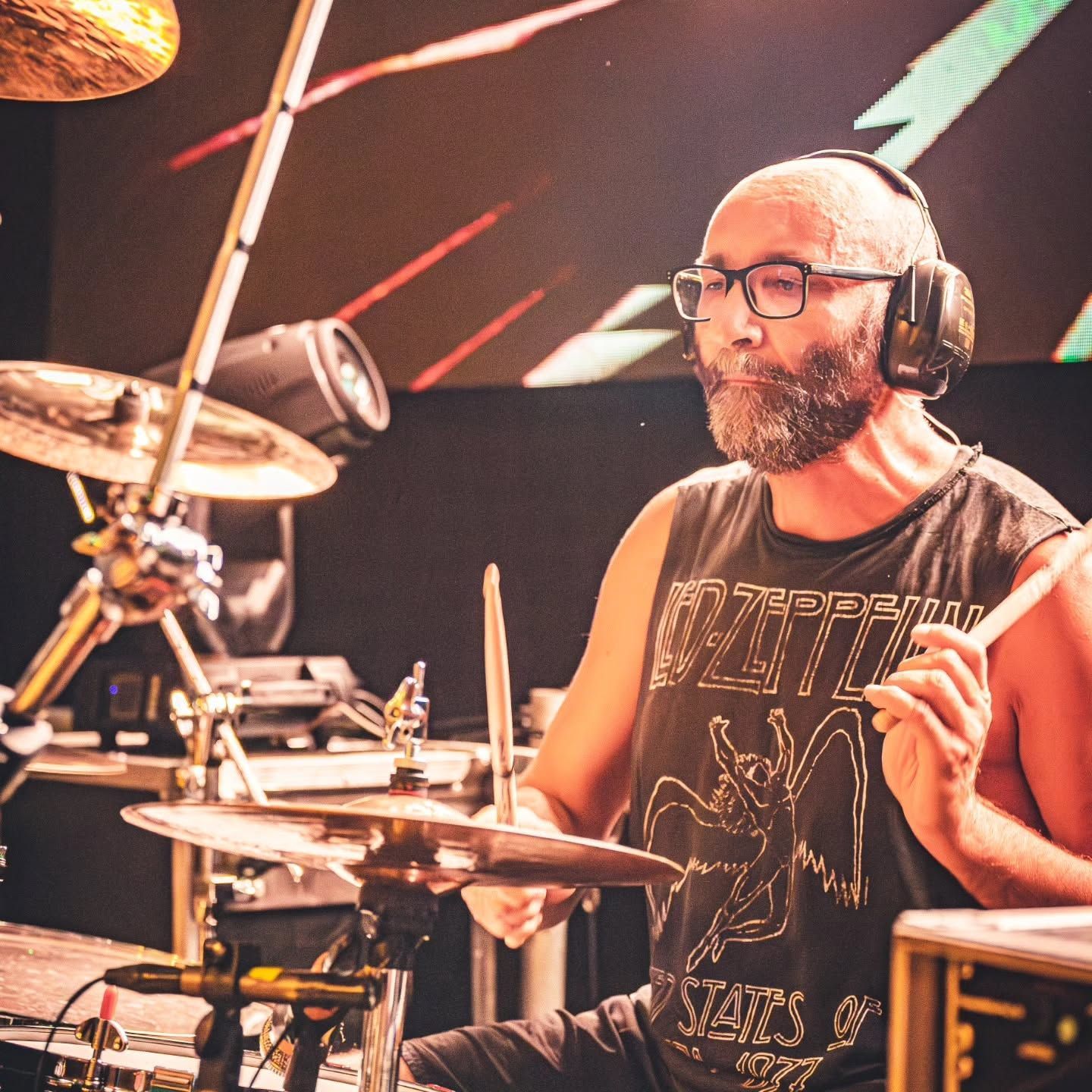
Sergio Ponti (1980) is a very well known and highly active drummer. He is currently performing with the Romanian band Dirty Shirt and has performed live and recorded with many well-known international musicians, such as Ian Anderson Martin Barre, Dave Pegg, Jonathan Noyce, and Clive Bunker of Jethro Tull, David Jackson of Van der Graaf Generator, Bernardo Lanzetti of Premiata Forneria Marconi, and Mike Keneally. Besides his work as a musician, he is also a content publishing manager for Drumeo.
And he is a great friend. So it was time to have a chat.
Sergio, you’re just back from the great Wacken Festival. Another succesfull performance with Dirty Shirt. How was it?
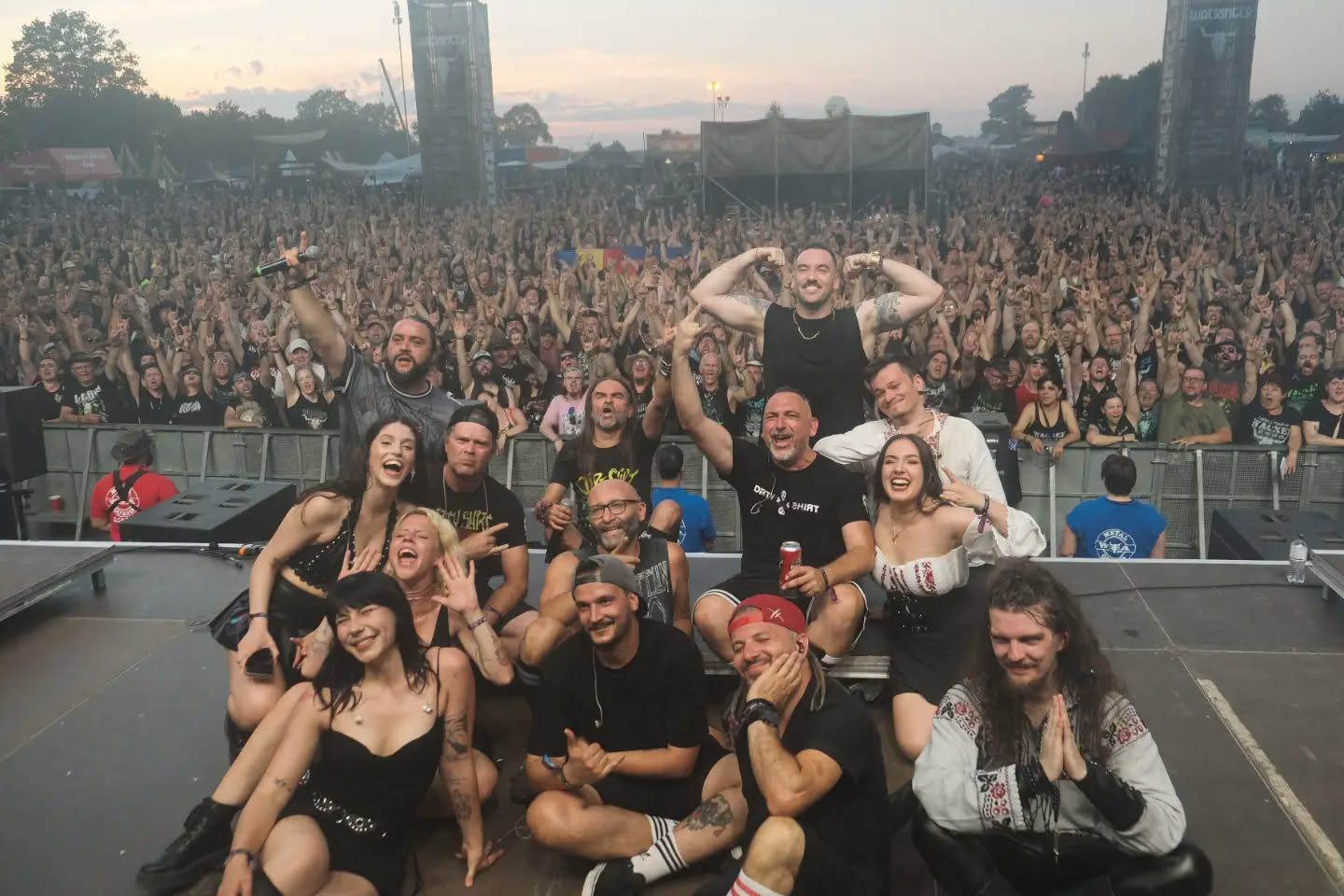
Wacken is very special and super organized: 6 or 7 stages, and the backstage area is as silent as a small town in the Netherlands.You don't hear any sound from any stage, so in the backstage area you can actually chill and relax. The food is great—there is a huge catering area ,the size of three or four tennis courts. Dietary options, a barber, a jacuzzi area, massage,.. all free for the artists, even free tattoos!
Brilliant! So now you have seven tattoos?
“ No! Our bandleader Mihai went to the barber and got a pretty exotic shave on his head. The whole band stood behind him like a crowd while he was getting shaved, and he could see all of us in the mirror. I think it was the longest haircut he ever received.”
Back to the beginning:
As an Italian, you were a talented goalkeeper, and now you're a drummer. How did that happen?
“Funny enough, I think the two roles are very similar. First of all, I was a more than decent goalkeeper, but I was not good enough to play in the big leagues. I wasn't tall enough either—when I finished playing, being around 1.84m was starting to be considered too short. I also saw many goalkeepers who were much better than me, so I was smart enough not to pursue a poor career in the minor leagues. I turned to drumming instead. I'm not the best drummer in the world either, but I am definitely reliable.
To go back to the similarities: both the goalkeeper and the drummer are at the back. The drummer sits in the back, and the goalkeeper stays at the back of the pitch, but both direct the play. A goalkeeper screams suggestions to defenders or midfielders on how to position themselves, while the drummer—depending on how quietly or loudly they play—dictates the dynamic of the whole stage. And second, the most obvious one: if you make a mistake, everybody notices!”
Yeah, absolutely. But you're a very accomplished drummer—in fact, I think you're one of the best in the world, to be honest. And I call you "Professor Tull" because you transcribed all the drum parts from Jethro Tull. Your technical and theoretical background must be enormous. How did you develop that?
“I was very fortunate as a kid to find a great drum teacher named Furio Chirico. Furio is one of the most accomplished jazz-rock drummers in Italy. He played for the progressive jazz-rock band Arte e Mestieri, who back in the 1970s were at the same level as bands like Banco, PFM, and Le Orme. They toured with Gentle Giant and ELP. Furio still runs a great drum school in Torino, my hometown.
When I started taking lessons from him, I really liked how he pointed out your weak points, but heavily underlined your strong points as well. Instead of just listing what you needed to improve, he would say, "You excel at this." For me, that was music theory and reading. He told me, "You can really work on your transcribing and reading skills, and that will take you places because not many drummers have that predisposition." He made reading, theory, and transcribing a fun challenge at every lesson. I practiced a lot, partly to impress him, and at one point he told me, "I think you know more than me in this field." He started recommending me to Italian drum magazines looking for transcribers for their educational pages, and I took it from there.
To this day, Furio is the only Italian drummer to have played the famous Modern Drummer Festival in the United States, back in 2002. That was another huge stroke of luck for me: Furio didn't speak English at the time, so he brought me along as his interpreter. I got to attend the festival and meet legends like Billy Cobham and Simon Phillips.”
You also work for Drumeo. How did that come about, and what is your role as a curator for them?
“I started working for Drumeo just before the pandemic. I sent them an email asking if they needed song transcribers. They said they weren't really working on songs at that moment, but asked if I worked with a notation software called Finale. I told them I used Sibelius, so maybe we couldn't work together.
My wife then said, "Are you crazy? You just missed a huge opportunity! I'll download the software for you, you learn it, and then you get back to them." So basically, I faked it until I made it! I spent two weeks learning the software—they know about this story now, by the way, so feel free to publish it! I sent them a trial transcription, they loved it, and after I transcribed a few songs, the idea of building a vast song catalog for students was born.
Throughout the pandemic, I transcribed one song a day and sent it over. We built a huge catalog with the help of other transcribers around the world. In the summer of 2021, they hired me officially to work on other educational materials part-time. A few months later, they brought me on full-time to manage and coordinate the Drumeo Songs program. My job includes deciding which songs get released, assigning transcribers, managing budgets and invoices, and writing posts describing the characteristics and difficulty of each song.
It's my main job. Working at Drumeo is fantastic because working remotely gives me a lot of freedom. Once I hit my targets and complete my tasks—which I always try to do well in advance—it leaves me plenty of time to remain an active performing drummer.”
You also transcribed loads of Jethro Tull songs.
“All of them! From the early days up to jethrotull.com, I have done all the drum parts.
I started doing it simply out of love for the music—and probably a bit of craziness! Jethro Tull is my favorite band, and all the drummers who played with them are among the greatest in rock and prog rock. I have a soft spot for Barriemore Barlow, of course, but I also love Clive Bunker, Mark Craney, Doane Perry, Jerry Conway, and everyone else who recorded with them.
Transcribing their work is a challenge. The drummers play so clearly that identifying the rhythms is straightforward, but on late '60s and early '70s recordings, the mic techniques weren't as advanced. Individual toms weren't always mikes separately, so it can be hard to tell which low-tuned tom is being struck. Plus, back then, Ian often mixed the drums a bit further back in the soundstage due to limited track availability and dense instrument arrangements.
Eventually, Ian saw some of my transcription work and asked if I could send him some material and arrangements. It grew from there. I love working with Ian—he is a consummate professional. If you send him an email, he often replies within an hour. That tells you why Jethro Tull operates so smoothly; he manages the business side incredibly well.”
And now he's assisted by his son James as well.(see interview on this website)
“Yes, I love James. He is a very kind human being.”
Ian made a lovely video clip about you as well, mentioning "the broad shoulders of Sergio Ponti."
Yes, there's an extended version with even more context before he talks about all the drummers!
Now, you live in Romania. How did that transition happen?
“My family and I were growing increasingly dissatisfied with living in Italy—the bureaucracy, public offices where no one seemed to have answers.I realized I was constantly complaining, but since I had a job that allowed me to relocate, I thought, "Why don't we just move?"
I always say I didn't move back to Romania, I moved forward to Romania, because it genuinely improved our quality of life. My wife is Romanian, and we found an incredible community of musicians and a great music scene here. We identified Cluj as a potential city. I came alone for ten days in the summer of 2021 to check it out, went back home, and said, "Yes, I like it." By late September, we had moved. We rented for ten months and then found a beautiful house on the hills south of Cluj. We bought it outright without needing a mortgage. We absolutely love it—it feels like paradise.”
And your dog has plenty of space to run around!
“ We have a yard with over 100 trees, so there is plenty of gardening to do! It takes me four hours just to cut the grass. But Charlie, our dog, absolutely loves it. We always joke that we bought the yard for him.”
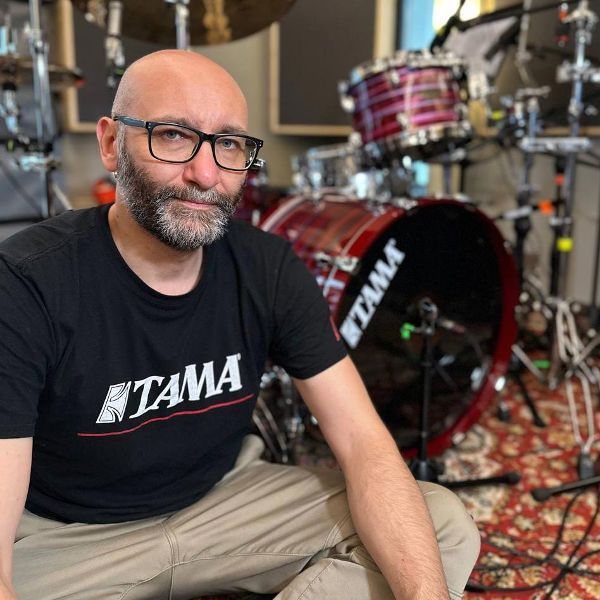
Let's talk gear. What are your favorite drums, setup, and cymbals? You’ve played a lot of different kits over the years.
“ I’ve played kits from almost every manufacturer, and honestly, modern drum building is very high quality across the board. I’m not a big fan of vintage kits for touring because the pace we maintain on the road with Dirty Shirt would destroy them. I need solid, modern instruments.
A few months ago, I signed an endorsement deal with Tama Drums. Tama has been my dream brand since I was a kid—so many of my influences played Tama, like Lars Ulrich (Metallica), Pat Torpey (Mr. Big), Liberty DeVito (Billy Joel), Doane Perry (Jethro Tull), and Nick Menza (Megadeth). When they offered, I jumped at the opportunity. I love their reliability and how well they stay in tune.
For sticks and heads, I use ProMark and Evans, whom I've endorsed since 2007. For cymbals, I endorse a small Finnish company called Sihi. Their cymbals sound fantastic—our sound engineer in Dirty Shirt, Adrian, loves them too. I really appreciate working with a small, independent business and supporting someone doing great work.”
What originally made you want to start playing the drums?
“Two main things. First, seeing the music video for "One" by Metallica on MTV when I was about eight years old, around late 1988. The camera angles from above, the side, and behind Lars Ulrich—especially the section with the fast unison double-kick and guitar triplets—left a massive impression on me.
Second, listening to Creedence Clearwater Revival records at home, particularly the album Cosmos Factory. The final track on that record, "Long as I Can See the Light," is a slow, soulful tune. I remember playing along to it on a chair using drumsticks for the first time. Achieving that basic groove gave me a sense of accomplishment that made me ask my parents for a real drum kit. And they were very supportive and patient—which was necessary, because for the first few years, I was a pretty terrible drummer! But they never told me to stop; they encouraged me to take lessons.”
How did you get involved with Dirty Shirt?
“Dirty Shirt is the reason I lost my hair and my beard turned gray! Jokes aside, during my first few months in Romania, I saw a Facebook post saying they were looking for a substitute drummer because their drummer, Vlad, couldn't make every show. I recorded a quick phone video of myself playing one of their tracks and sent it over with my resume.
We scheduled a rehearsal to see if we clicked musically and personally. I came super prepared—I knew all the album tracks, the live arrangements, and the structural variations. Things clicked immediately. I’ve been in the band for four years now and have become the main full-time drummer. I love it. The music blends folk, prog, metal, rock, and even hip-hop. It's the most fun band I’ve ever played in, and we all get along brilliantly.”
It really shows. I saw Dirty Shirt live in Cluj and wrote about it on my website. The energy and joy on stage are unique. You often have between 8 and 14 people on stage—how does that work logistically?
“It depends on logistics, availability, and the promoter's budget. Different lineup sizes have different price points, so we adapt. Playing with the full 14-piece lineup is incredible—it looks like an entire football team plus substitutes on stage!”
Are you currently working on a new album with Dirty Shirt?
“Yes! I’ve already finished recording the drum tracks for the upcoming album, and Palli, our bassist, has completed his parts too. I’ve actually even tracked drums for a couple of songs for the album after this one! The new album is coming out really strong. Ian Anderson contributed flute to a track called "A Brighter Day," which will be released as a single in September. We’re targeting a February 2027 release for the full album, accompanied by a big launch show at Quantic in Bucharest.”
Is Mihai the main composer?
“Yes, Mihai Tivadar, our bandleader, is the primary songwriter.
What are your future plans? Continuing with Drumeo and Dirty Shirt, or anything else on the horizon?
“I hope to continue both for a long time. At Drumeo, I love the management and quality-control side of sheet music and notation—I enjoy detail-oriented work. Musically, my focus is 100% on Dirty Shirt. I'm not looking to take on other band projects right now unless Jethro Tull comes calling! Ian Anderson is a huge inspiration to me; seeing his drive, vision, and output at 79 makes me hope I have that same energy at his age.
He's still going strong, and he puts out very good albums. I actually think his latest albums are better than the ones he released 10 years ago.”
I have an incredible amount of respect for him for still performing at this level.
You have a soft spot for Barriemore Barlow. How did that come about? You’ve had a lot of contact with him. Tell me a bit about that.
“When I was a teenager, my drum teacher Furio turned me on to the Jethro Tull albums featuring Barrie. I was literally mesmerized by his level of inventiveness and virtuosity, both in his playing and in how he conceived the drum parts. I must have spent 20,000 hours listening to and trying to analyze what he was doing.
When I finally met Barrie, he told me I was crazy because he is very self-deprecating about his drumming with Tull. He feels he stepped over the vocals because they recorded the drums without guide vocals. Of course, I keep telling him that's bullshit, as do drummers all over the world.
The first time I met Barrie was in 2003. I was playing with Beggars Farm, and we performed the album A Passion Play in its entirety. Barry came to see us. I was 23 back then, and he was very complimentary of my performance. He saw that I had transcribed everything by hand—it was about 40 pages—and he signed my sheet music.
We stayed in touch. I met him again in 2008, and he invited me to his house twice: once in 2012 and again in 2015. I got to stay at his place, which is also his residential studio, The Dog House. He made us breakfast and took us around his town. By the way, his neighbors include Ian Paice of Deep Purple, David Gilmour, and Eric Clapton—they all live in the same village. He showed me their houses and the estate where George Harrison lived, which is the park you see on the cover of All Things Must Pass.
He took us out on the Thames in his motorboat and took us to dinner. It was so cool to get insight into his time with Jethro Tull. He was the prankster of the band, just like I am in Dirty Shirts! When we left, it was very touching because you could tell he wanted us to stay longer. I haven't seen Barrie in person since, but we’ve spoken a lot on the phone. I remember one morning in 2015 when I got up early, he was already in the garden and made me tea. It was just the two of us for two hours, and he gave me a lot of advice about the music business, publishing, royalties, and balancing family life as a musician. He's a very special guy.
In fact, I looked up Barrie's address on Google Earth once. If you rotate the view toward his house, you can actually see him getting mail directly from the postman! If you know Barrie, you recognize him immediately.”
Now for a couple of fun questions I ask everybody: what is the strangest or funniest thing you've experienced during a performance or in the studio?
“There are many, but years ago in Italy, when I was in my early 20s, I was playing with a folk-rock band. I didn't notice that the drum riser was a bit tight, and one leg of my stool was right on the edge. I stood up to hit the cymbals, and when I sat back down, the whole throne went backward off the riser! The band told me afterward that they just saw my hands reaching up, trying to hit the cymbals and floor toms on the way down. Falling off the drum riser while playing—that’s the first one that comes to mind.”
And lastly, is there an unknown band or underrated drummer you think people need to discover?
“For me, an Icelandic band called Agent Fresco. They have an incredible drummer and write amazing songs. They had a lot of momentum around 2014–2016 and released a stunning album called Destructreg (note: likely referring to A Long Time Listening or Destrier).
The drummer is a friend of mine, but his Icelandic name is hard to pronounce (Hrafnkell Örn Guðjónsson, so he goes by Keli. I haven't seen such a unique drummer playing such great songs in a long time. Usually, you either get great songs with a standard drummer, or a virtuoso drummer where the songs are just a vehicle for soloing. With Agent Fresco, the songs are short with beautiful melodies, but the drumming is completely unpredictable.”