
Luis Nasser
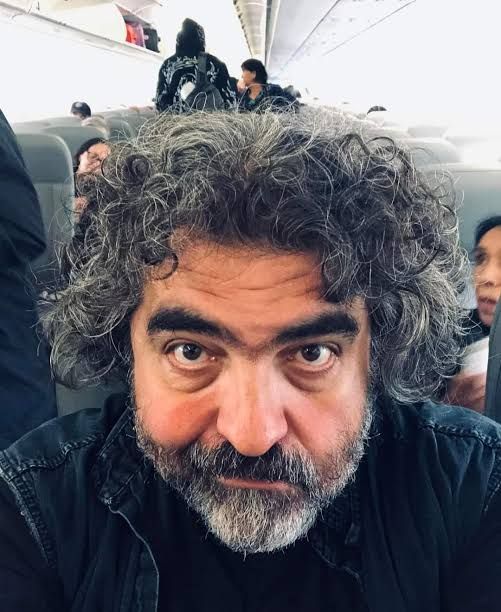
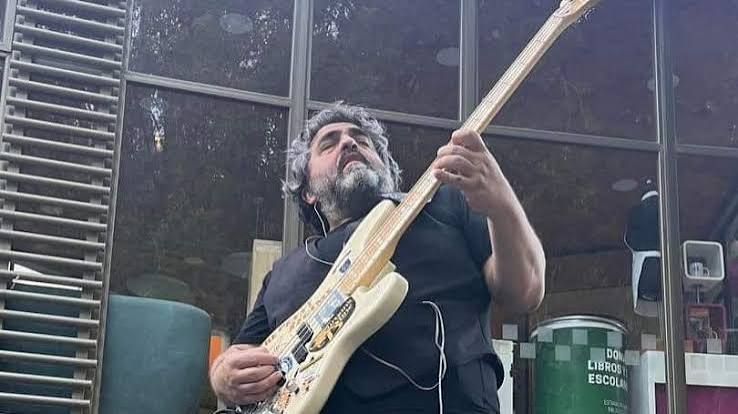
Luis Nasser: scientist, bassist, composer with Sonus Umbra and The Devil's Staircase.
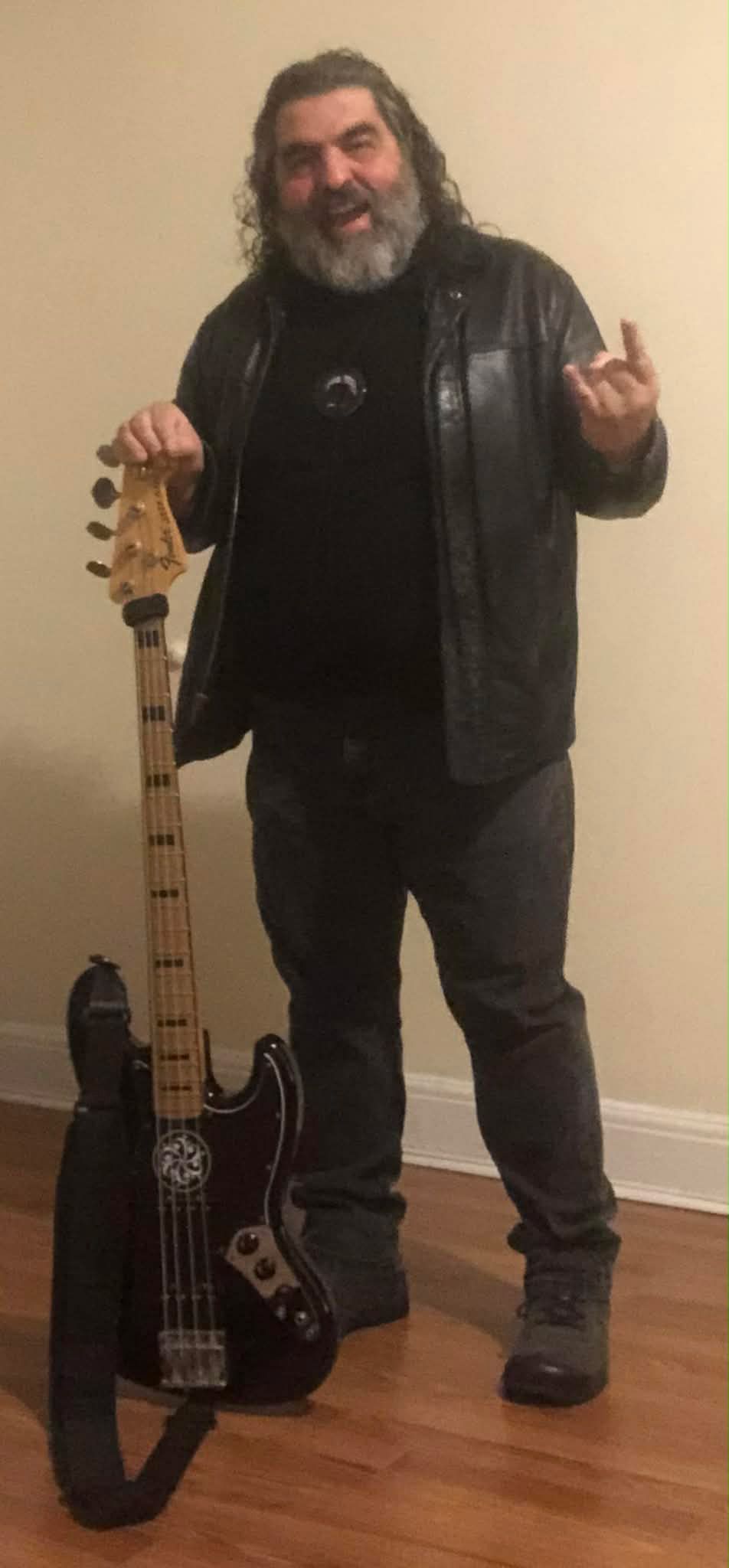
Arne, Thanks for taking the time to talk to me Luis! Can you introduce yourself? You are are a scientist and a musician. An intriguing combination. Tell me who is Luis Nasser.
Luis: I was born Mexican and became a US citizen, naturalized in 2006. I am actually now living in Mexico City, so it has all gone full circle. For most of my life I had an equal affinity for the mathematical language of nature – expressed through the laws of physics – and the equally compelling patterns of sound that we call music. Mathematics is the secret language of nature. Music is the secret language of the soul. To be creative and productive at both you need a fearless imagination and monk-like discipline/devotion. I am a lifer in these pursuits and there’s no two ways about it.
To answer “How did this all happen?” I can only say: How could it not? Once you learn to listen to the mathematics the way you deeply listen to music, a new world opens up from which you can never turn away. You just need to learn how to really listen.
Who is Luis Nasser? A human being, learning, growing one hard lesson at a time, striving towards excellence.
Arne: You produced two new albums with Sonus Umbra and The Devil’s staircase. Can you introduce me to the two bands. And why two bands?
Luis: Sonus Umbra is a band I formed in Baltimore in 1998 from the ashes of a previous band called Radio Silence that existed in Mexico City from 1989 to 1993. The strange name came because we were signed by Moonchild records in California to release a demo I put out called “Laughter in the dark”, and before We sent the label the music I got cease and desist messages from a Russian band called Radio Silence that had trademarked the name. I decided we needed a new name, one that was so strange and ugly no one would have it! I opened a latin to Spanish dictionary, and created a Faux Latin phrase “Sonus Umbra” intended to mean “ Shadows Made of Sound”, and also a new album which became “Snapshots from Limbo”. We have been around as Sonus Umbra for 28 years, and have released 8 albums. I am the founder, the main composer/lyricist and the only guy present in every incarnation through the years. Incidentally, Moonchild records ended tragically soon after releasing snapshots, but I haven’t stopped moving forward since. Sonus Umbra is my main vehicle for creative expression. It really is a band in the sense we all arrange the songs, but I write 95% of the music and lyrics, and I provide creative direction for the albums we make and the concepts we tackle.
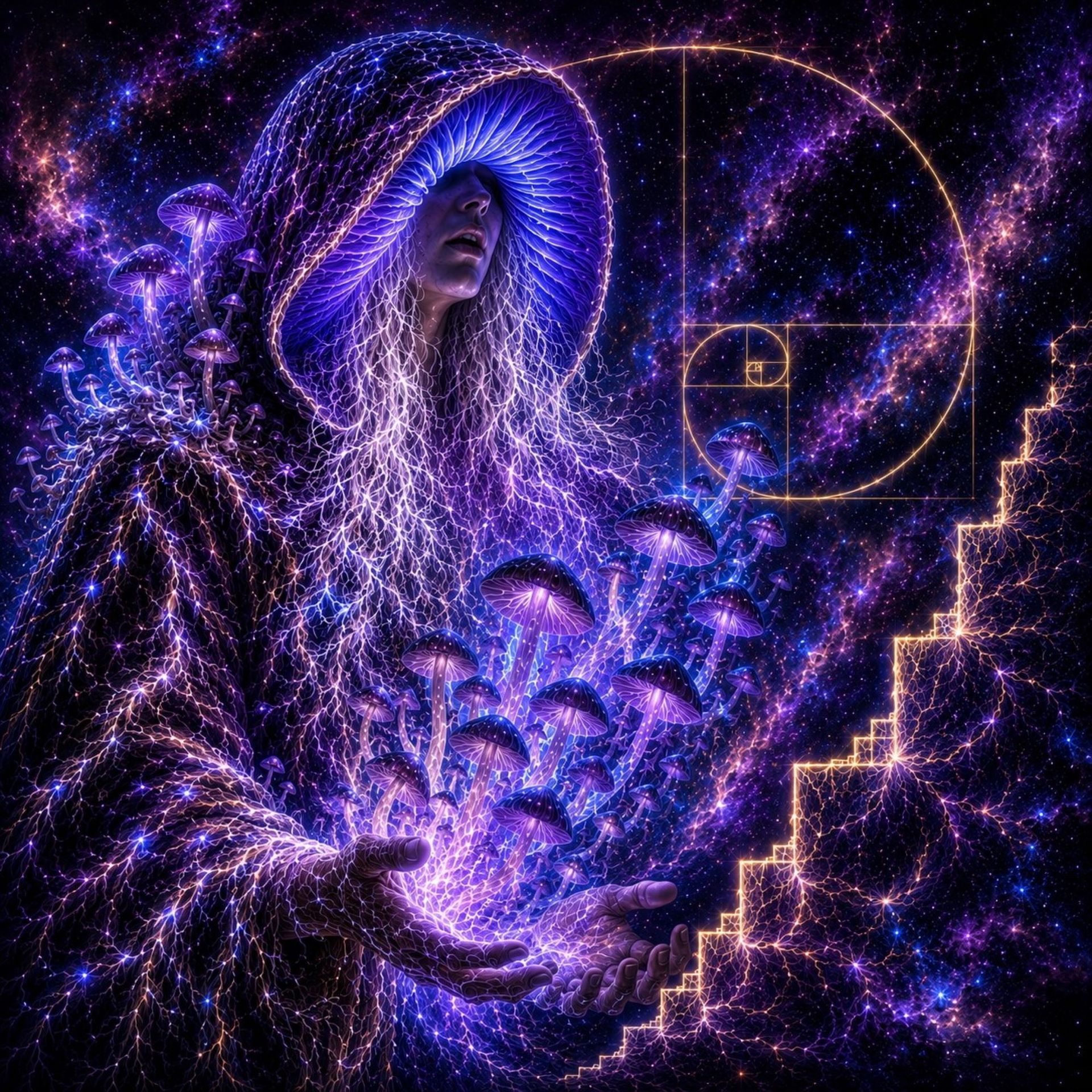
The Devil’s Staircase is a band that attempts to take the real mathematics of the world and use that to shape musical composition. It is not algoritmical – it is all composed and must be played by humans. The basic aeshetic is that patterns in nature arise from great repetition of simple patterns that – inevitably – sometimes break down or mutate slightly. It is all instrumental so i don’t have lyrics to help me put forward the subject matter that captivates my imagination.
Why two bands? Well, I am actually in 3! Might Could is an instrumental acoustic guitar and bass quartet led by Andy Tillotson, and after a 10 year hiatus we will be releasing a new studio album – our fifth!
But to answer your question, why not? It keeps me interested, motivated and happy.
Arne:The new Sonus Umbra album is based on your experiences surviving two brain tumor operations. To be diagnosed with the brain tumor must have been devastating. How did you cope with that?
Did writing the album (which is stunning) help you?
Luis: Well, it wasn’t fun. Mainly, my worry came from the fact that both of my parents had cancer. It killed my dad (brain cancer) when I was 8, so although there was no way to know until they cracked open my skull to take a biopsy, I suspected it was probably game over. I mean, we are all dying, right? This just put a possible close date on mine, and it made me want to live what was left of my life fully; try to get out as much music and physics as I could before the hourglass ran out. The album was not written in a conventional sense. The music came to me in the ICU. My brain felt like an antenna and I scribbled what I was hearing in my head on hospital napkins before the whole thing faded like a dream, so the music actually came after I knew I would make it.
Arne: How does the writing process for both bands usually go for you Is there a difference between both bands?
Luis: Huge difference. In Sonus Umbra it all comes from feelings that give birth to sounds in my head and words to deliver those sounds. With the Devil’s Staircase, it comes from scientific preoccupations/fascinations, and how to make them sound like something cinematographic and fun? The Devil’s Staircase is less personal than Sonus Umbra, but they are both immensely fun.
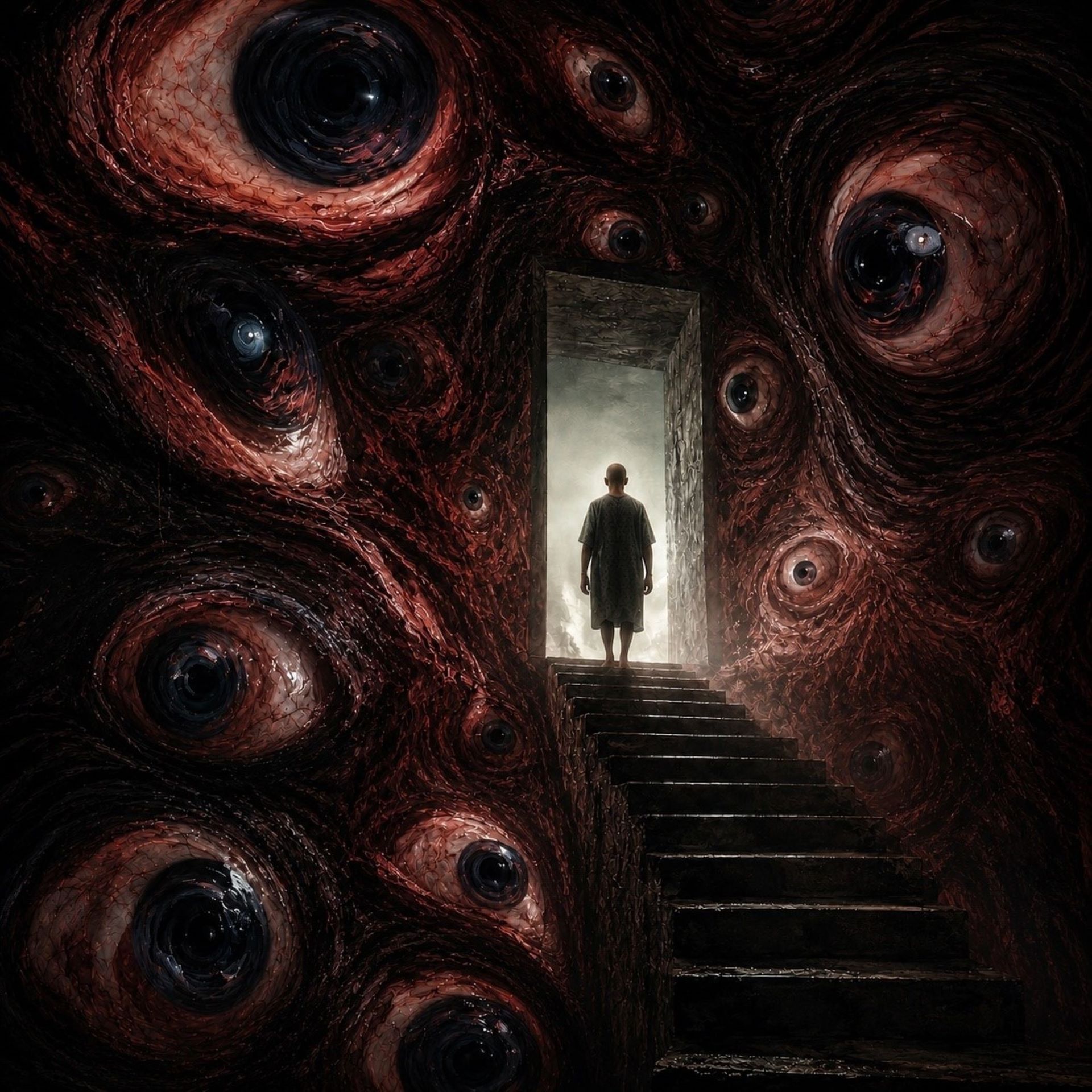
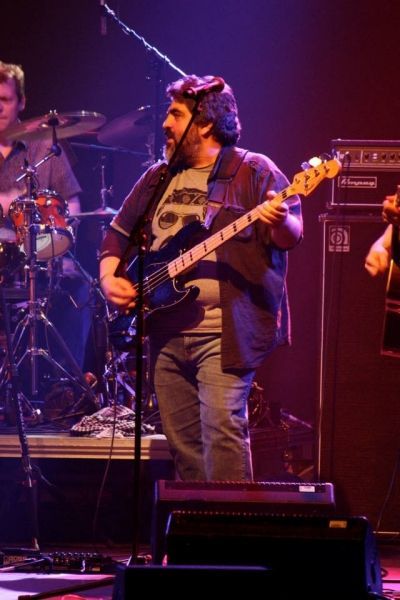
Arne:You’s a bassist: what is your absolute favorite instrument to play, and is there a special story behind it? What other equipment do you use?
Luis: For 30 years I have been a Fender guy. In 1988 I bought a Squire Precision and in 1995 I bought a real Fender jazz. A 1975 model that is gorgeous. Now, your readers will want to crucify me but I modified it! I put in a badass bridge II, a hipshot tone Xtender and pick ups that don’t have that annoying hum. What can I say? A bass is an instrument. A tool, but also a part of me. I don’t buy them to stare at them, I will play the living shit out of them. In 1998 fender started selling Jazz basses with all the things I needed (save the Hipshot Xtender). They were the Geddy Lee model, and I have owned and played one ever since. I LOVE that axe. Very recently, I discovered passive Sterling bass guitars. In particular, I got a great deal on a satin black Joe Dart model that now also has a hipshot Xtender, and man, that is SWEET.
I am a big pedal nerd. I have been a Darkglass B7K player for many years, but I started playing on an Alpha Omega Photon a few years ago and haven’t looked back. I also love Octave pedals and Phasers by MXR, and gnarly delays, like the amazing Fernweh from JPTR FX in Germany or the Earthquaker Devices Avalanche Run. But i have to admit the secret sauce is the JPTR FX Jive saturator. It gives the bass so much harmonic content, and so much presence without messing with EQ or volume, it is a MUST
Arne: What is the biggest misconception people outside the music industry have about the life of a musician or a scientist?
Luis: People know very little about the life of a musician, and essentially zero about the life of a scientist. People don’t know how few albums are sold, how tough it is to get from point A to point B, play a great show, pack up and do it again, sleeping where you can. Touring puts you in contact with other mammals who are stressed, irritable and not at their best. And yet, you have to play every show like it’s your last, and yeah, I am always grateful to the fans and will sign anything they want, take pictures… even if I don’t feel well, because I don’t know how much THEY had to go through to get to the gig. In Science – at least in the sort of theoretical physics I do – you spend a lot of hours every day alone, calculating and getting NO publishable results. But it’s not a failure: I am learning how NOT to do something no one has ever understood how to do either. It seems crazy until people realize this sets your imagination on fire. And of course, they will never know the thrill and the joy of finding the answer: of being the first to know something new about nature. All they see are dudes with glasses and white lab coats on films and TV and assume it’s cookie cutter robots. Nerds (my people) are amazing. Some of them are evil like Bezos or Musk or Thiel, but for the most part, nerds are misunderstood. The same is true of composers and writing music. The rehearsals and tours are collective experiences (at least for 2 hours a day during the gig) but everything else is isolation and a beautiful uncertainty mixed with curiosity. Feelings that bubble up to the surface, and you have to extract what they sound like. It’s not a party. Almost no-one is the red hot Chili peppers, you know? Even massively successful bands like Rush, read books and got stoned alone after the show. I also love music nerds. Sonus Umbra is all music nerds, and it’s so nice...
Arne: Where do you hope you and your music will be in five years? Are there specific venues, festivals, or countries where you dream of playing?
All my efforts are geared towards spending the next five years releasing new music and playing festivals/touring Europe. We had our first gig ever in the UK with Sonus Umbra at the Fusion festival in 2026 – an amazing event curated by Steve Gould and the whole crew that make it happen – and I want more! I want to bring the music of Sonus Umbra to Germany, Portugal, France, the Netherlands, Belgium, Italy, Spain… anywhere we can in Europe. Playing 2+1 in Veruno, Midsummer Prog and Roadburn Festivals in the Netherlands, Crescendo in France, Europblast in Cologne… just so many amazing opportunities! And of course, the bucket list would be to go play in Japan. Tokyo in particular beckons me.
Arne:Which artist (living or resurrected) would you love to have a cup of tea with or dive into the studio with?
That is tough! While Frank Zappa is a hero of mine, I don’t have the chops to play in his band or record in his studio! And yeah, a conversation with him or Roger Waters would be amazing, but no… I will have to go in a different direction and give you a tie here: I would love to have met John Coltrane. That man was also a physicist, in the sense that he was a genius at finding the patterns of the natural world, but he did it through harmony instead of algebra; he heard the patterns and didn’t search for them with his eyes. Have you seen Coltrane’s Mandala? Check it out. To talk to him about science and music would be incredible and transformative. But… I would equally love to meet and talk to David Bowie. Say what you will, but ever since he died the world has been going to total shit. That guy was an alien, and I would learn so much about what matters in life. Not the Thin white duke era Bowie, but the Earthling version, when he found peace or maybe the Black Star version when he said goodbye and implied he’d found the secret handshake of the universe.
Arne: Which hidden gem (a relatively unknown band, film, or book) do you think our readers really need to discover?
Luis: I am a huge fan of Blank Manuskript, an Austrian band of extreme talent and intelligence. I don’t think they have the notoriety they deserve. Finally they are headlining a festival in the UK, but most people still don’t know them, which is insane.
Arne: I totally agree, they're one of my favorite bands too! Thanks so much Luis!