
James Duncan Anderson
Not just 'the son of'!
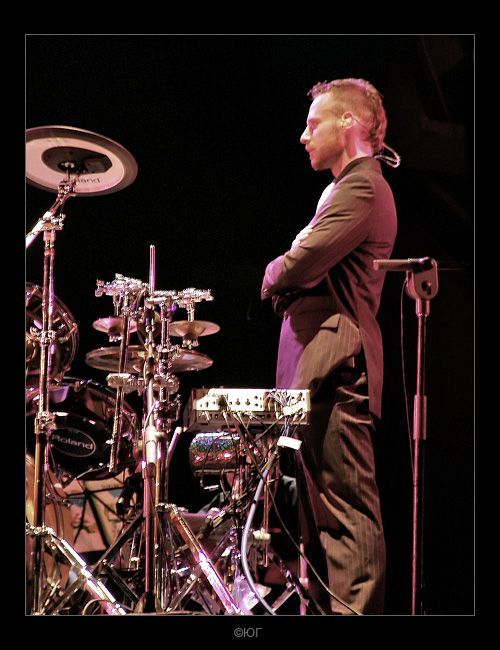
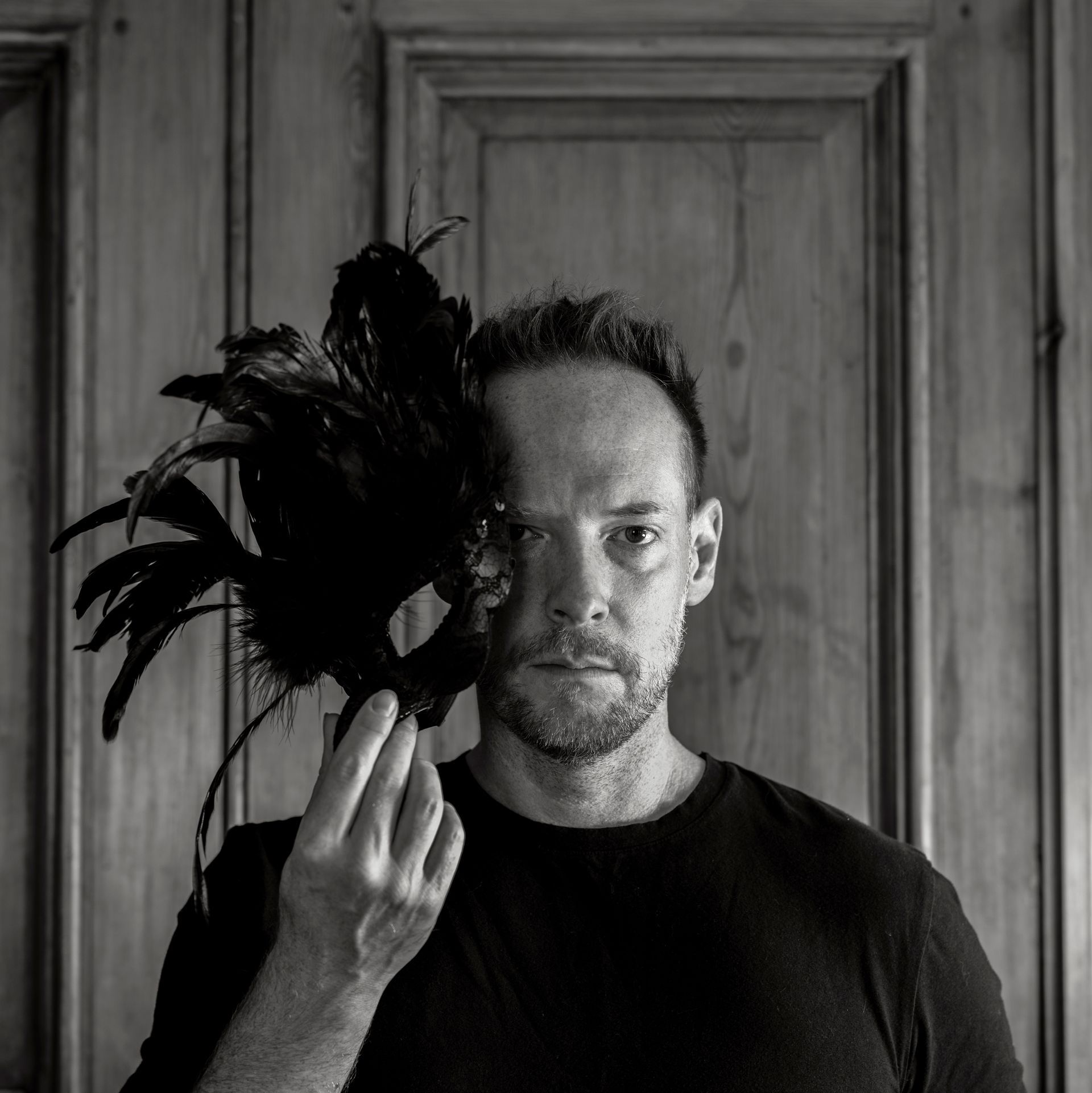
On the latest Jethro Tull album ‘Curious Ruminant’, drummer James Duncan suddenly reappears. Years ago, James played with Ian Anderson during the Orchestral Jethro Tull shows (including in Amsterdam) and during the ‘Rubbing Elbows’ tour. He also performed at numerous Jethro Tull concerts. But you can also find him on a number of albums and in videos. What stands out about James Duncan is that he bears quite a resemblance to the young Ian Anderson. That makes sense, because he is his son. As a drummer, he did not want to capitalize on his surname, but instead uses his middle name, Duncan.
James is not just a Jethro Tull drummer; he owns a number of businesses, including a resort in Iceland, and he is the agent and co-manager for Jethro Tull. In this latter role, he handles all contracts with companies like Sony/InsideOut, books all shows outside the UK, and promotes the shows in his home country. In the past, he also managed Fairport Convention and Mostly Autumn, but unfortunately, he no longer has time for that.
James is back as drummer; with the exception of two songs featuring regular drummer Scott Hammond, he plays all the tracks on the new album. James confirms that Curious Ruminant sounds different from the previous two albums. ‘It is a different album for two reasons,’ he says. The first is that it is a more personal album for Ian. Ian is a quiet and sensitive man, and because it is more personal, it is a bit less rock-oriented than previous albums. Although it has its moments. Additionally, it is based on ideas that originated in 2007 when we were trying out some things in the studio. ‘We’—that was myself, David Goodier (bass), John O’Hara (keyboards), and of course, Ian. Ian found these recordings again and decided to use parts of them. And then there was another song, ‘Drink from the Same Well,’ which was even older, featuring Andy Giddings on keyboards. It is a somewhat strange mix of different time periods, but Ian only uses what makes sense to him and develops it further with new material.
James, your drumming style differs quite a bit from that of regular and excellent drummer Scott Hammond, and you can hear that clearly on this album. You play more complexly, with more ghost notes on the snare and beautiful fills. “Thanks, yes, but everyone plays differently. When I heard the old demo recordings, it sounded pretty fresh, and I continued with that. But now Scott is playing two of the songs I recorded in the live set. He interprets what I did, and when I listen to that, I think he does it better. We had some rehearsals for the new show two weeks ago, and you can hear the difference. Anyway, I had to do it without vocals and without electric guitar when we recorded it. That makes it harder. I let Scott hear how I would play it now, and he went further with that. That’s how it evolves. You know, I was listening to Thick As a Brick 2 yesterday, and Scott plays that really fantastically.”
I’ve noticed that on all Jethro Tull records, the drums are always a bit further back in the mix. In the Bruce Soord mix of RökFlöte, they get more ‘presence,’ and then you hear what a technically good drummer Scott Hammond is. James confirms that. “Bruce really loves the drums and the bass. He starts the remixes with the rhythm section and doesn't hide it. Steven Wilson moved the vocals a bit further back in his remixes of the Tull albums. He prefers the instrumentation. It is very interesting how they handle that.
But Bruce gives it all a bit more power; you can hear that in the surround mix, but also in the stereo mix he creates. And as a drummer, it’s always fun to be a bit louder, isn't it?”
Why did you start playing drums, James? “When I was 10, we had a drum kit at home in a soundproof room. I liked that; it was big, and I could hit it really hard. And as a little kid, that space meant I didn't get into trouble by making too much noise. But after that, I mainly played guitar in bands. And although I kept drumming, I liked playing guitar better. But suddenly, when I was 17, I got an offer to play drums for someone and got paid for it! Through my neighbor, I got in touch with someone who wanted to put a band together. So I auditioned and not long after, I was in a recording studio. It was an eye-opener. I was getting paid to play! That’s how my professional drumming career started. Although, a year before that, I did a TV show with Jethro Tull—unfortunately lip-syncing—as a stand-in for Doane Perry. It didn't make sense to fly him over from the US for just one song in a show. Currently, James doesn't play live much anymore, but there is an electric drum kit in the corner of his office, and if he has 5 or 10 minutes, he can play it.” can't resist playing for a bit. His son is 6, and when he comes to the office, he obviously has to let loose on that kit too.Why did you actually play on Curious Ruminant and not Scott Hammond? “I had already played on two or three songs from 2007 that we used,” says James, “so I was already on the album. David Goodier’s bass parts were used for those songs as well, and some keyboard and accordion parts. But a lot has been renewed and the electric guitar is completely new. Ian had 5 new tracks where he wanted new drum parts and cajon on one of the songs. I play cajon and Scott doesn’t, so I recorded that at home and sent it to Ian. He also wanted drums on that song and other tracks and asked if I wanted to do that. I hadn’t recorded drums for quite some time, but I really wanted to do it, partly because work on the album had to continue and Scott wasn’t available at the time. I was only going to do Drink from the Same Well and The Tipu House. I was already on the album and it therefore didn’t feel strange, so I did it, and after a few weeks Scott did the remaining two songs.”
Did you receive a demo or guiding tracks to learn the songs? “Yes, Ian sent me the music with a click track. But those are already the master tracks for his vocals, guitar, and flute. No bass, electric guitar, or keyboards. And I got notes just like he does with Scott. Like: in this section four hits on the bass drum and then two snare hits there, some 16ths on the hi-hat and some jazzy ride cymbal and so on?” He gives his ideas and the ‘feel’ but otherwise leaves it up to us how we play ghost notes, fills, and bass drum patterns. Especially in The Tipu House, he was very specific about how he wanted it played. Ian hears in his head what he wants and tries to make that as clear as possible. Not just with the drums, of course, but with all instruments. “He has always done that.”
All the drums were recorded in Ian’s studio. That isn’t a recording studio, but more of a live rehearsal space. James brought microphones, an audio interface, and his laptop. Scott and James recorded everything using the same drum kit and the same equipment. James is credited on the album as the recording engineer, but he considers that too much of an honor.
James briefly returns to Bruce Soord’s mixes after a compliment on the drum sound. He has visited Bruce’s studio regularly and explains how much time Soord spends on the remixes. He has a lot of equipment, plugins, and uses all kinds of different monitor speakers. Bruce, unlike Ian, understands how the recording software works. Ian is much more ‘Oldschool’ and uses the software like a two-inch tape. He has no plugins, no virtual instruments, and so on. If you have a bad snare drum recording, Ian will redo it, whereas Bruce uses the recording to trigger a virtual snare. Ian doesn’t save anything either; if something needs to be done 15 times, you don’t get 15 recordings from him, but just one. Managing Jethro Tull, how does that work? James explains that, ultimately, Ian has been doing the management for a very long time. He makes the final decisions and determines the creative future. “I do a lot more of ‘the boring stuff’ so he doesn’t have to deal with that. For example, I make sure there is enough merchandise wherever we play, and together we decide on designs that we think work well. I am also a buffer between him and all those people who want something from him. Ian is someone who does things himself that you wouldn’t expect. For instance, Ian books all the flight tickets himself. He is his own travel agency. He can spend hours on that. He always tries to book the most economical way to travel via the British Airways website (BA has special rates for musicians). I don’t think Elon John does that, haha.” James has been the UK promoter since 2004. He is currently booking a tour for next spring. He visits all the venues, deals with rental rates and dates, and then determines the most logical sequence. Unlike in other countries, in the UK it is not a problem if the travel time between two concerts is around 40 minutes or 50 kilometers. That doesn't clash. In Poland, a travel time of 5 hours is already too much, and the promoter says no. James finalizes all the contracts, ensures ticket sales start, and handles all the publicity. That is a lot of work.
For all other countries, James is Jethro Tull's agent. He deals with all the promoters and books the shows. “We have been working with the same promoters for a very long time, so they know what we want and we know how they work. In addition, I take into account that there isn't too much travel time between the concerts and that they connect well. In Europe, we also have to take the weather into account.” It can sometimes be so hot in the south that an open-air concert isn't safe for a 77-year-old. That's why we hardly do open-air concerts anymore. So I make sure that we work with good promoters, can play in interesting venues, and that British Airways flies there (at least nearby). We have to make it as comfortable as possible for everyone. That is why we also want to work with the same people: the regular lighting technician, the regular sound engineer, and the regular band. And they need to have enough work too, otherwise they will move on to something else. Ian wants to have them fully available and therefore give them enough work so that Jethro Tull remains the priority. We do fewer shows every year, but given Ian’s age, that seems logical to me. And a piece of news: we are working on shows in Holland for 2026.”
James Duncan Anderson: indeed much more than the son of!