
Clive Nolan on the Music Industry: "There Will Always Be an Audience!"
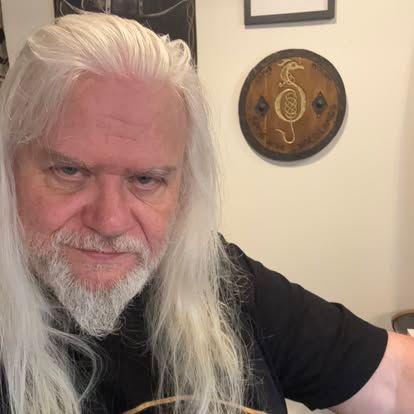
Keyboards, recording, record deals, touring, streaming, and the enduring power of vinyl and CDs. A deep dive into the changing music scene with prog-rock veteran Clive Nolan.
Clive Nolan has been a fixture in the music world for decades. Widely known for his work with seminal progressive rock bands Arena and Pendragon, he is also the mastermind behind ambitious musical projects like Wildlands and, more recently, Imaginaerium. As a notoriously busy musician, Nolan sat down to discuss how the music industry has transformed since he first stepped onto the scene.
The Meadhall
What are you working on at the moment, Clive?
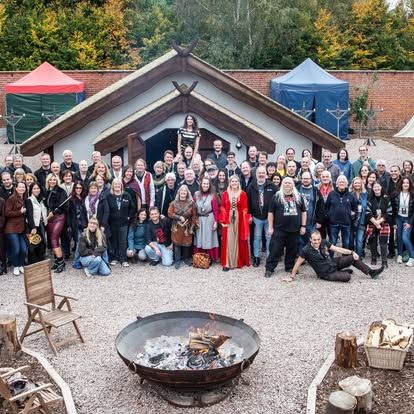
"Well, in addition to writing music for a new Imaginaerium album and preparing for a few very busy months with Arena and Pendragon, I’ve build my own concert hall. I call it the Mead Hall, inspired by my deep interest in all things Viking.
I will be organizing exclusive weekends featuring my own music there. I am very curious to see how it will go."
The Keyboard Evolution: From Analog Nightmares to Digital Bliss
Clive describes himself as a music industry veteran. Classic rock and classical music formed his foundation until a change of schools prompted him to reinvent himself. "Until then, I was extremely shy and introverted," he admits. To grow into his new environment, he decided to push past his boundaries and actively discover music outside his comfort zone.
Through mixtapes traded among school friends, he discovered bands he had never heard of. One day, he walked into a record shop with £20 and bought an album solely because of its artwork: Seconds Out by Genesis. That single purchase sparked his lifelong passion for progressive rock.
The Early Days of Synths
"In my school year, there was Matt Clifford—who went on to play with the Rolling Stones," Clive recalls. "We used to talk about keyboards like pianos and organs, but back then, there were hardly any synthesizers. I remember someone explaining to me what a Mellotron was—the one with all those actual tapes inside it. The synths just before my time were those giant analog boxes with patch cords poked into holes and dials that made you sound like a Doctor Who soundtrack."
When the first Moog and ARP synthesizers and "string machines" arrived, Clive started a band called Sleepwalkers. He borrowed an organ and spent £100—a fortune at the time—on a Wasp synthesizer. It had two oscillators and a massive, thick sound.
"Everything went brilliantly in rehearsals," Nolan laughs. "But the Wasp had a completely flat, touch-sensitive keyboard. During our first gig under the stage lights, I couldn't actually see the 'keys.' If I managed to hit Middle C, finding the next note was a total gamble. It was a nightmare!"
Stacking Gear
Another early favorite was the Elka String Machine. "That thing was fantastic. It only did one sound, but it was brilliant. In those days—as you clearly saw with Rick Wakeman and Tony Banks—each keyboard only did one specific thing. So you had an organ, a Mellotron (preferably on the choir setting), a Moog or an ARP, and so on. They were stacked. And I loved that."
When Arena and Pendragon started touring about 30 years ago, budgets were tight, but Clive managed to scrape equipment together.
"When we recorded The Visitor with Arena, I had nine keyboards, bass pedals, MIDI racks, and effects processors," Clive says. "It looked spectacular on stage, and I needed two people just to set it up, but it was a technical nightmare. I used a central switching box, but if a single plug came loose, all hell broke loose. Eventually, I had to downsize to five keyboards."
The Modern Setup
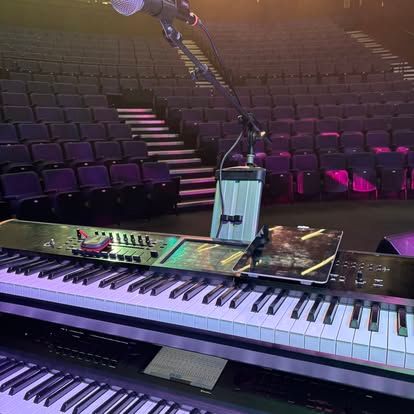
As technology advanced, master keyboards and MIDI routing improved. However, progressive rock physically demands a multi-keyboard setup: one hand holding down complex chords while the other flies over a lead line. Clive eventually reduced his rig to three keyboards, and today, he has achieved his ultimate setup: two Korg Kronos workstations (one 88-key and one 73-key).
"I’ve used Korg for many years now, and because the basic functionality remains consistent, it saves an immense amount of time," Nolan explains. "I can program everything much faster and build up incredibly flexible layers of sound. It’s my ideal setup, and a massive leap forward from where I started. Those early Moogs and ARPs had no memory; you had to manually dial in every patch live on stage between songs. Fortunately, modern technology has put an end to that."
The Reality of Touring: Post-Covid and the Brexit Burden
The conversation shifts to live performances, the post-pandemic landscape, an aging demographic, and the stark reality of modern ticket sales.
"Don't underestimate how difficult it is to sell tickets these days," Clive warns. "People often think, 'Oh, there are only 200 tickets, that'll sell out in no time.' It’s not that easy anymore. Before Covid, fans bought tickets the moment a show was announced. Now, they hesitate."
During Arena’s 2022 tour, pre-sales were dangerously low just weeks before opening night. "Mick Pointer and I seriously debated canceling. We had already postponed the tour twice due to Covid, so we pushed ahead. Luckily, the album dropped, the reviews were fantastic, and momentum shifted. We ended up with six sold-out shows. But nowadays, so many people wait until the final minute."
Skyrocketing Costs
Compounding the ticket issue is the fact that venues aren't offering higher guarantees than they did a decade ago, while touring overheads have skyrocketed. The cost of renting a nightliner bus, for example, has more than doubled since the pandemic.
"For established bands like Pendragon and Arena, we can survive because we have history and a loyal live reputation," Clive notes. "But new bands in this genre are facing an uphill battle. We can still tour Europe, but Brexit has made it incredibly difficult. Unless you can afford to heavily invest up front, you're better off staying in the UK. We refuse to 'pay to play'—this is our livelihood, and we need to earn from it."
The Logistics of Brexit
When asked about streaming concerts as an alternative, Clive remains skeptical. While he might explore it for intimate shows at his new Mead Hall, he believes nothing replicates the visceral atmosphere of a live gig.
What truly hinders European touring now is the bureaucratic nightmare of post-Brexit logistics. While musicians can enter many European countries without a visa for short stints, the return of carnets (temporary goods passports) has complicated everything.
"We had to deal with carnets decades ago when Pendragon first started, and it was a massive pain. Now it's back. We actually have to pay an administrator just to handle the paperwork. I have to log the serial number, dimensions, financial value, country of origin, and weight of every single piece of gear. You pay for the carnet itself, and then you face double taxation on merchandise."
To circumvent this, Clive explains that it is often cheaper to have merchandise manufactured locally within the EU. "It feels like we're being actively punished for Brexit. The border checks are frequent and exhaustive. It drains time and money. For our Imaginaerium/Medici project, the only way we made it work was flying the musicians from Italy and England into the Netherlands without instruments. We rehearsed locally, borrowed gear, and relied on a German employee to transport the merchandise. It sold out and everyone got paid, but it was an exhausting jigsaw puzzle."
In the Studio: From Cassette Ping-Pong to Unlimited Tracks
Recording technology has undergone a parallel revolution. Clive reminisces about his youth, using two cassette recorders to bounce tracks back and forth—a process known as "ping-ponging"—to layer instruments, sacrificing audio quality with every generation.
Later came the Portastudio, a four-track cassette deck with a built-in mixer. "While at university, a friend and I would record four tracks on one machine, mix them down to a stereo track on a second Portastudio, and then record more parts over that. It sounded terrible by modern standards, but it felt miraculous at the time."
The ultimate dream was always a professional studio equipped with 2-inch, 24-track tape machines. Clive remains a staunch defender of the classic analog sound: "It possesses a warmth and depth that is incredibly difficult to replicate digitally."
The ADAT Transition
The industry transitioned to digital in the 1990s via ADAT machines, which recorded eight digital tracks onto standard Super-VHS tapes. By linking three machines, studios achieved 24 tracks.
"Getting those machines to synchronize was absolute hell," Clive recalls. "And they simply weren't built for the abuse of 12-hour studio days. When we were tracking Arena’s The Visitor, we ended up needing nine ADAT machines in rotation: three running, three being serviced for tape wear, and three kept as backups."
Today, Clive works entirely in the digital domain using Pro Tools, equipped with a massive library of high-end virtual instruments and plugins. "I recorded the Wildlands album using more than 60 digital tracks. The technology has taken such a massive leap forward; the sheer capabilities of programs like Pro Tools, Logic, and Cubase are mind-blowing."
The Physical Format Battle: Vinyl, CDs, and the Spotify Problem
When it comes to the ongoing debate between vinyl, CDs, and streaming, Clive holds strong opinions.
"There’s a clear argument for vinyl’s sonic depth, but it requires a high-quality turntable and pristine care. Ironically, musicians often own the cheapest, worst-sounding home stereos! That’s why I do all my listening on my studio monitors."
While he views CDs as convenient, streaming is a different story. "Once your music is on the internet, you lose control. In the old days, we had pirates pressing 1,000 bootleg CDs in Mexico without permission. Today, internet piracy and unauthorized streaming are the exact same thing, just on a larger scale."
The Valuation of Art
Clive expresses deep frustration with the modern consumer's reluctance to pay for music.
"People complain about paying £15 for a CD, yet CD prices haven't risen in twenty years. With inflation, they should cost £45. People don't understand the labor involved. I spend weeks writing and demoing an album. Then I bring musicians into a studio for a month. We mix, master, and pay for artwork and manufacturing. It takes a year of my life. And then someone whines about paying a fraction of a penny to stream it."
"I hate Spotify," he states flatly. "I view it strictly as a promotional tool because I don't earn anything from it—about 0.0007 pence per stream. It works for Taylor Swift, but not for independent progressive rock musicians. Streaming platforms are not designed for us to make a living."
Taking Control: The Rise of Independent Labels
Early in his career, securing a record deal was viewed as a magical milestone. "You had to take your demo tape to London, sit in an office with an A&R executive who listened with his feet on the desk, and let him tell you why your music wouldn't sell. Occasionally, they'd show mild interest and ask for another demo just so you could say a label was looking at you."
Fed up with the gatekeepers, Clive Nolan and Mick Pointer took matters into their own hands and founded their own independent record label to manufacture and distribute Arena's albums.
"We wanted complete artistic and financial control. Today, anyone can release an album from their bedroom. While that means there's no longer any quality control, it's worth remembering that those old A&R executives weren't particularly qualified either. Operating independently forced us to become sharp businesspeople, but understanding the entire pipeline helped us immensely."
The Death of the Fanzine
While the internet has opened doors for global promotion, it has also fractured traditional music media. When The Visitor came out, promotion relied on physical magazines and independent fanzines. Today, print magazines are vanishing, and fanzines have been replaced by Facebook groups.
Despite declining CD sales, Clive notes that older generations still actively demand physical "hardware."
"Releasing an album should be an event," Clive asserts. "You want to hold it in your hands—whether it's vinyl, a CD, or a deluxe 'earbook.' You want to immerse yourself in the artwork and read the lyrics. Streaming kills that experience. It encourages people to listen to a couple of tracks and immediately move on. It’s like listening to the first movement of Beethoven's Fifth Symphony and turning it off. But that is the direction the world has chosen."
The Future: The Pendulum Swings
Despite the digital shift, Clive remains optimistic about the endurance of genuine musicianship.
"Technology won't stop, and streaming isn't going away, but history moves in circles. Look at the massive resurgence of vinyl. Music is elemental; it never disappears, and there will always be artists driven to perform."
Even with the rise of Artificial Intelligence on the horizon, Clive believes human-made music will endure. "It’s getting harder, and we all have to adapt. Centuries ago, troubadours and minstrels traveled from castle to castle to earn a living. In a way, we've returned to that model. If you are a true musician, a bedroom studio will never be enough. You need to get out there. If you have a story to tell, you have to tell it—and there will always be an audience waiting to hear it."