Anne Claire Rallo
Bad Dog Promotions
and NineSkies
Music needs to be heard. A good promotion agency helps a lot.
Anne Claire does the job!
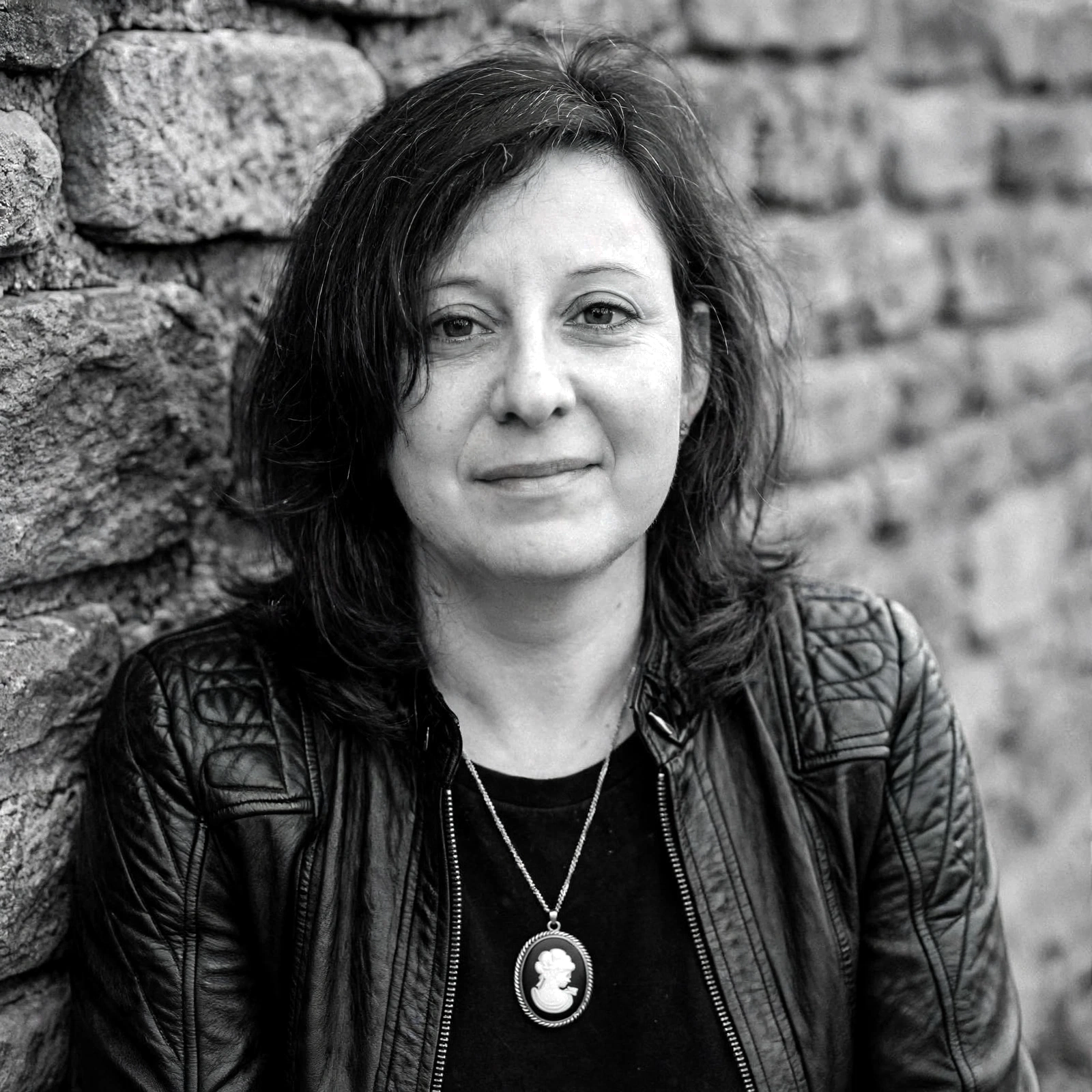
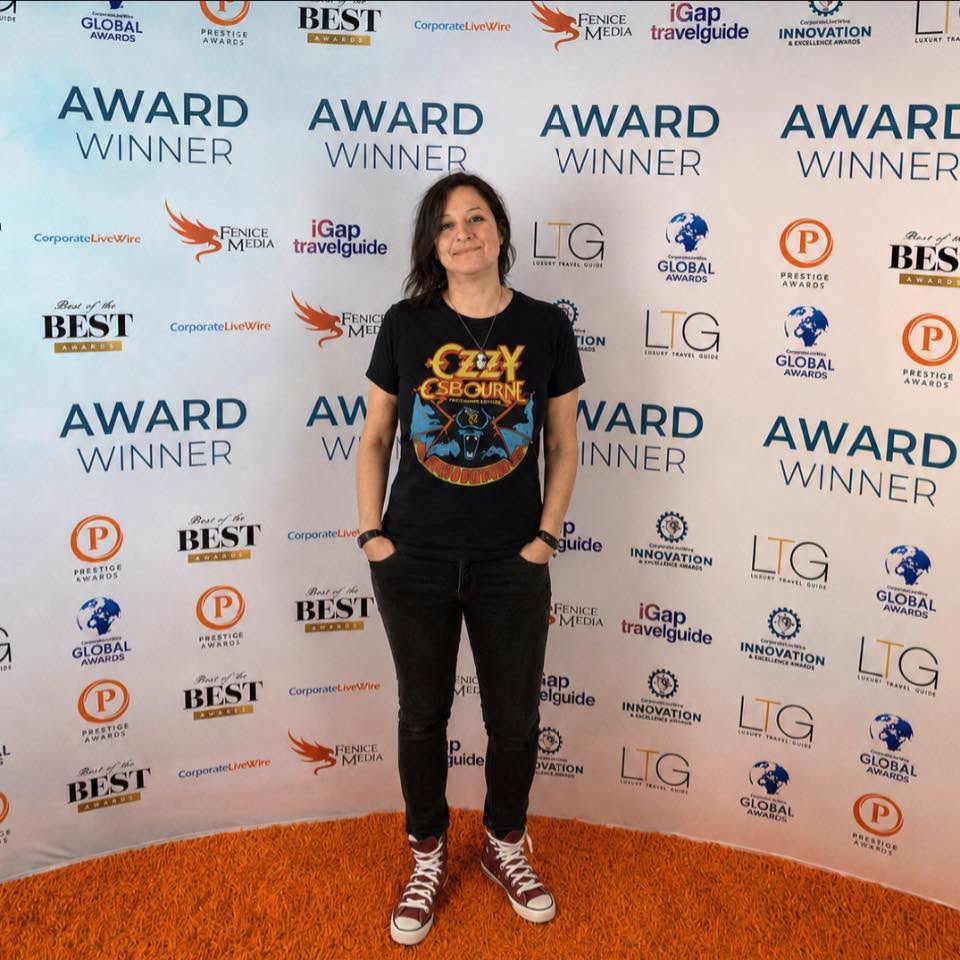
Anne Claire Rallo is the mastermind behind the award winning Bad Dog Promotions Agency. She is one of the people musicians trust with their work to promote. And she does that with great integrity. I love to work with her so I thought it was time to know a bit more about her. And musicians, believe me, she’s good.
Arne: Anne Claire, you have an award winning promotion agency. Why and how did you start it? Tell me about the name too please?
Anne Claire: It really started with a desire to turn a difficult situation into something positive.
At the time, I was working as a French coach and Director of the French Department at a private language academy. Then, completely unexpectedly, I suffered a stroke in January 2020. I spent some time in hospital and was subsequently unable to walk for several months. When it became clear that I wouldn’t be able to return to my previous working life straight away, I felt I needed to find something I could do from home, even if it was only for a few hours a week.
I had already been managing my band, Nine Skies, for several years, and I had always enjoyed the promotional side of the music industry — working on releases, communicating with the media, and helping to create opportunities for the artists. I realised that this was something I genuinely enjoyed, so I decided to give it a try professionally.
There was no grand business plan behind it. I had no particular idea of what it might become or where it could eventually lead. I simply wanted to build something I enjoyed, take it seriously, and see what happened.
It started with a couple of friends and contacts, then gradually grew through word of mouth. From there, one opportunity led to another, and Bad Dog Promotions slowly developed into the agency it is today.
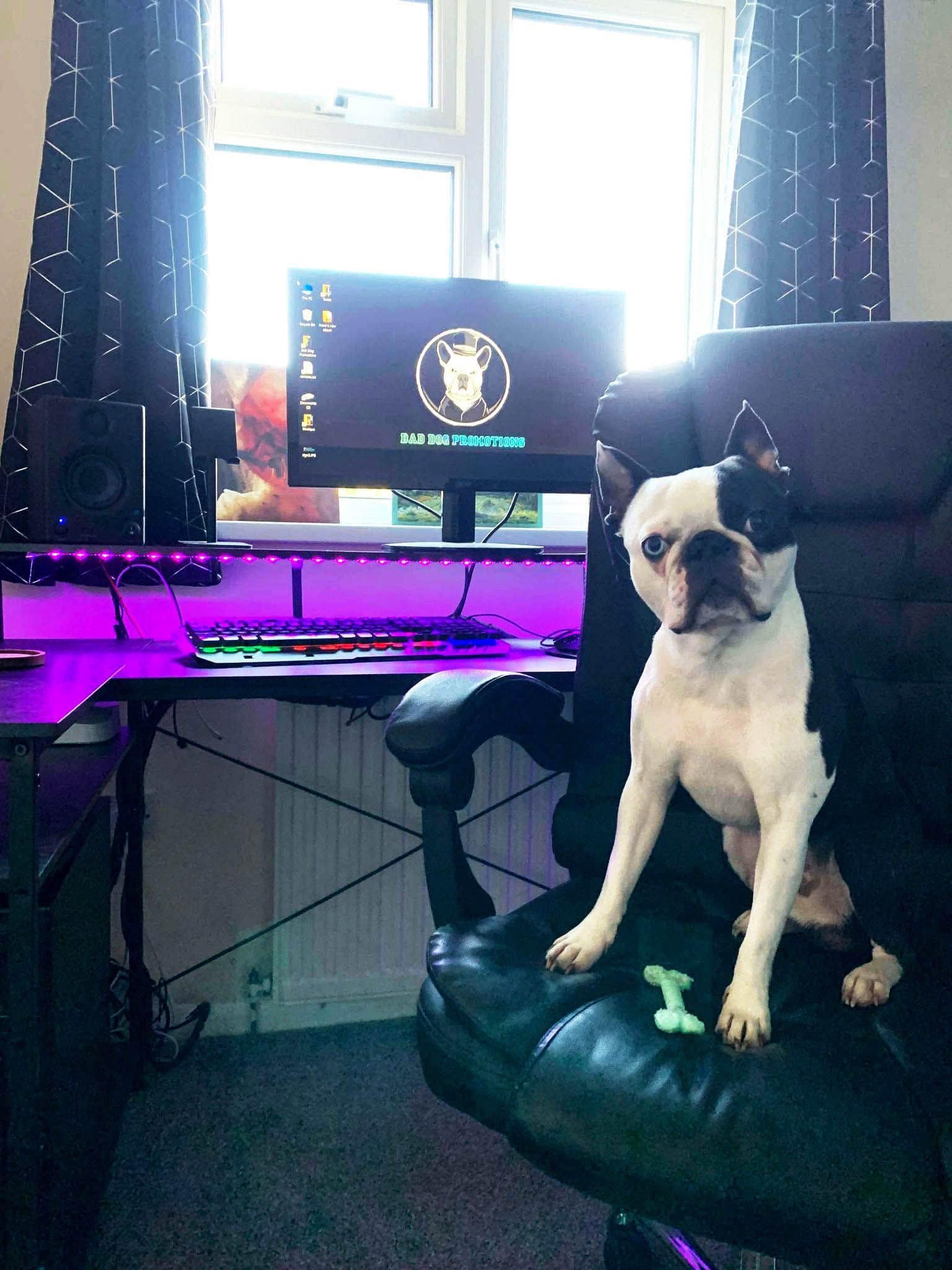
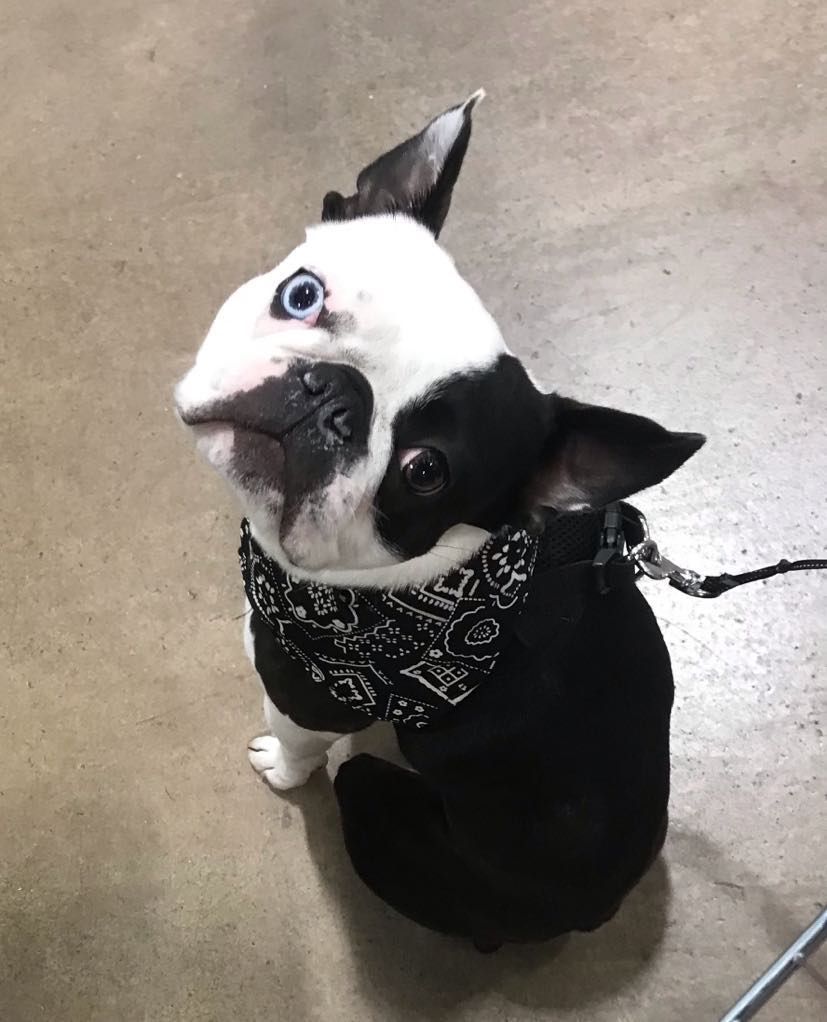
The name and logo are actually inspired by my dog, Looping, a Boston Terrier with a distinctive black-and-white face and a blue eye. He is definitely not a bad dog — quite the opposite! — but I wanted something that reflected the rock ’n’ roll character of the music industry. And, to be honest, “Bad Dog Promotions” had a much better ring to it than “Good Dog Promotions”, didn’t it?
Arne How did you develop the agency. Better names are on your roster all the time! What do you offer artists?
Anne Claire: Cookies!
Seriously, though, I think a huge part of it comes down to being lucky enough to meet the right people at the right time. That was certainly one of the first things that really helped me, just as it does when you’re in a band.
I’ve been fortunate to have some very good people around me, and I think the fact that we’ve continued working together is probably the best proof that the relationships have been genuine and mutually beneficial. When people are happy with what you do, they come back — and they recommend you to others.
I think I really started to feel that something was happening when I began working on promotion for Kristoffer Gildenlöw. We had originally connected because he was featuring on my band Nine Skies’ album, The Lightmaker, and at one point he asked me if I would be interested in handling the promotion for his next release.
As a huge fan of Kristoffer and his work, I was obviously more than happy to say yes!
That project also led me to Peter from Dutch Music Works, who manages Kristoffer’s releases. Peter is a fantastic person to work with and an absolute top-notch professional. That relationship became the beginning of something really important for Bad Dog Promotions, and it opened the door to many more opportunities.
Looking back, there wasn’t one single moment when everything suddenly changed. It was much more about building trust, one relationship and one project at a time.
The second thing is that, having been involved in a band myself for the past ten years, I can’t help but see things from both sides of the equation.
I’ve experienced the artist’s perspective first-hand. I know what it feels like to prepare and release an album, the excitement, the pressure, the doubts, the amount of work involved, and all the different stages that come with it. I think that gives me a genuine understanding of what artists are going through, rather than simply looking at a campaign from a business perspective.
It also allows me to build a relationship with the artists that goes beyond what is written in a contract. Of course, the professional side has to be there, but I believe in establishing a real connection with the people I work with. I want them to feel that I understand where they are coming from and that I’m genuinely invested in helping their music reach the right audience.
Arne: You’re French but you’re living in the UK. Why is that?
Anne Claire: For the weather and the food, what else?
Actually, I moved to the UK with my late husband, Eric Bouillette, about eight or nine years ago. It was something we really wanted to do. We’d been coming to the UK quite a lot, and every time, there was just… something pulling us back.
I think it was a combination of everything really — the history, the culture, the architecture, the countryside, even the mentality. We just felt good here. At some point we thought, “Why not? Let’s actually do it.”
And professionally, it made sense too. I was a French teacher, Eric was a guitar and violin teacher and a musician, so we both saw it as an opportunity to try something different and start a new chapter.
It was definitely a big decision, but it was a project we really wanted to make happen. And, looking back, I think we were right to do it.
Arne: You’re a musician yourself, I’m always interested: What instrument do you use (brands and why these instruments). What is your absolute favorite instrument to play, and is there a special story behind it?
Anne Claire: I’m not a professional or particularly technical musician, but I was lucky enough to have some musical training and to grow up in a very musical environment, so music has always been part of my life.
I enjoy playing guitar, bass and keyboards. For keyboards, I’m a Korg person, and for guitars, I really like PRS.
The Korg X50 I use on stage with Nine Skies is actually more than enough for what I play, which is mainly soundscapes and atmospheric parts. The big advantage is that it’s really light — or, at least, it was! I think mine has probably reached the end of its life now, but it served me very well.
I do like the Nord keyboards, but they’re probably a bit too expensive for what I would actually use them for. I’m much more interested in composing and working on albums than in playing live, so I don’t necessarily need a huge stage setup.
These days, you can do so much with a simple MIDI keyboard and all the amazing plugins available. If you’re mainly working in the studio, you can assign whatever sounds you want to the parts you’ve recorded. So, for what I do, a basic keystation can actually be more than enough.
Arne: Going back to the very beginning: what or who made you pick up an instrument? Musical education?
Anne Claire: I actually have to thank my parents first for that. Although, if you’d asked me when I was a child, I probably wouldn’t have thanked them at all!
They sent me to the classical conservatory when I was quite young, and I wasn’t particularly happy about it at the time. The teachers were pretty strict, and the classical approach meant a lot of practice, discipline and hard work. And, of course, I wanted to play the piano — but because every child seemed to want to play piano, they told me I had to play the viola instead!
So I was pretty annoyed about the whole thing as a kid. But now, honestly, I couldn’t be more grateful to my parents for making me do it. That musical education gave me a foundation that has stayed with me all my life.
And then I have to thank my brother, who is eight years older than me. He is a guitarist and singer in a rock band. He was the one who really opened the door to rock music for me. I grew up listening to Led Zeppelin, Sonic Youth, Red Hot Chili Peppers, Dire Straits… basically all the essential ingredients you need for a proper rock education!
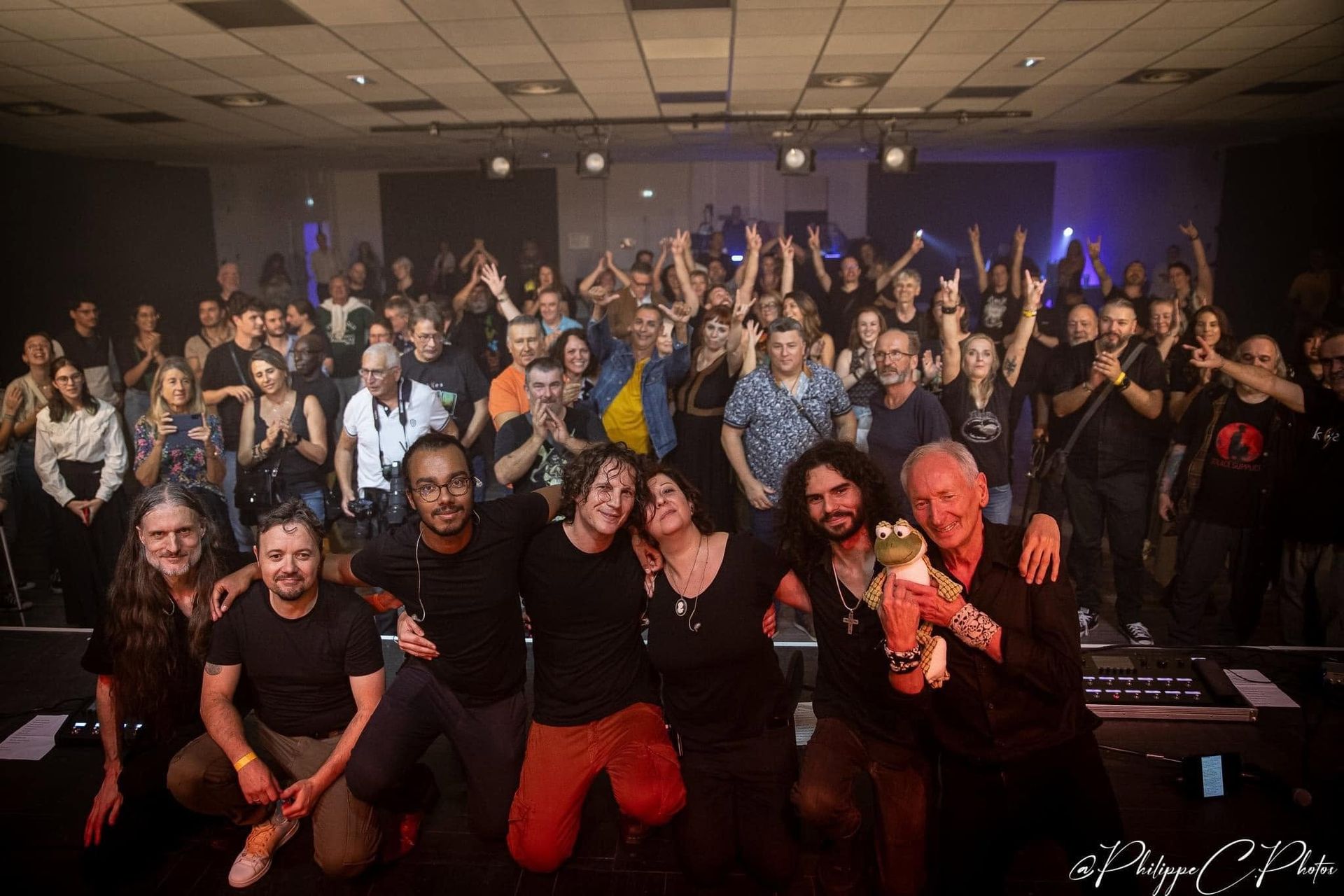
Arne: You’re a member of Nine Skies and working on a new album. Can you tell me more about that?
Anne Claire: I’m really looking forward to sharing this release. It’s quite a special one for us because it’s the first Nine Skies album with Riccardo Romano as the main lead vocalist on every track.
We’ve already worked together on songs like Sweetheart Grips and The Explorer, and he was also our vocalist on our last tour, so this isn’t a new collaboration at all. Riccardo has been a very close friend for many years, and the connection we have, both musically and as friends, really brings something special to the songs. And, of course, he’s an incredibly talented musician.
For this album, we decided to take some of our existing songs and completely rethink them in an acoustic setting. The idea wasn’t just to take the electric guitars away and play the same songs acoustically. We wanted to see what else was hiding inside them.
When you change the instrumentation and the dynamics, you suddenly hear different things. Some melodies become more prominent, some lyrics take on a different meaning, and there’s a much more intimate and emotional side to the songs that perhaps isn’t as obvious in the original versions. In a way, we’re not changing what the songs are, we’re revealing another side of them.
A Whisper Called Home (Acoustic Sessions) will be released on Friday, 20 November. Our followers have, as usual, been absolutely amazing, and we reached our crowdfunding goal thanks to their support, which means the album will be released as a physical digipak with a four-page booklet.
We’ll also probably release a single accompanied by a video, so there should be a few things to look forward to before the album comes out.
Arne: Where do you hope you and your agency but also your music will be in five years? Are there specific goals, and with the band venues, festivals, or countries where you dream of playing?
Anne Claire: I don’t really have any crazy plans, to be honest. I think I’ve learned not to plan too far ahead!
I just hope I’ll be able to carry on doing what I love for a living. Life has taught me that this is probably one of the greatest privileges you can have. If you can make a living doing something you genuinely enjoy, I think you’re incredibly lucky.
And it’s the same with the music. As long as we’re lucky enough to have the support of our wonderful fans and to keep making and releasing new music, that’s really all that matters to me. There’s always another song to write, another idea to explore, another album somewhere on the horizon.
The live side of Nine Skies is a little more complicated, though. We have members based in France and the UK, and Riccardo is based in Italy, so getting everyone together for a show involves quite a lot of preparation and, unfortunately, quite a lot of costs as well. It’s not always easy to make it work.
But having said that, if the right opportunity comes along, of course we’ll take it. We’ll find a way to make it happen and… let’s rock!
Arne: You know a lot of them already, but which artist would you love to have a cup of tea with or dive into the studio with?
Anne Claire: Robert Smith!
Arne: What is the strangest or funniest thing you have ever experienced during a performance or in the studio? Or with your agency.
Anne Claire: It wasn’t actually with Nine Skies — it was with Damantion, our acoustic tribute to Opeth.
We had the opportunity to support Fish, which was a pretty big deal for us. Fish’s sound engineer, Shaun, was a really funny guy, and I remember one particular moment backstage that still makes me laugh. We had a pink cake — and somehow Shaun looked at it and asked, completely seriously, “Is that chicken?”
I mean… it was a pink cake! I still have no idea how he got to chicken from that!
And then you had Fish backstage watching the rugby, getting increasingly moody about whatever was happening in the match. So the whole backstage atmosphere was just quite surreal: Shaun wondering whether our pink cake was chicken, Fish getting increasingly annoyed watching the rugby, and us trying to get ready to go on stage.
It was one of those completely random backstage moments that you probably wouldn’t think twice about at the time, but years later you still remember and laugh about.
Arne: Something I always ask: Which hidden gem (a relatively unknown band, film, or book) do you think my readers really need to discover?
Anne Claire: Well, there's so many... I'm not sure it's unknown but... One book I think deserves to be read (or read again) in the middle of today’s AI debate is Norman Spinrad’s Little Heroes.
He published it In 1987, partly inspired by seeing a friend using a vocoder.
It is a dystopian science-fiction novel set in a near-future America where a giant corporation, Muzik Inc., controls popular music and mass media. Real human rock stars are being replaced by computer-generated Artificial Personalities (APs) designed through market research to produce perfectly commercial music.
I won’t spoil the book. But reading it now is striking. Not because Spinrad predicted AI, but because he understood something deeper: technology doesn’t just change art. It can change our idea of what an artist is.