
Alan 'Ally' Carter
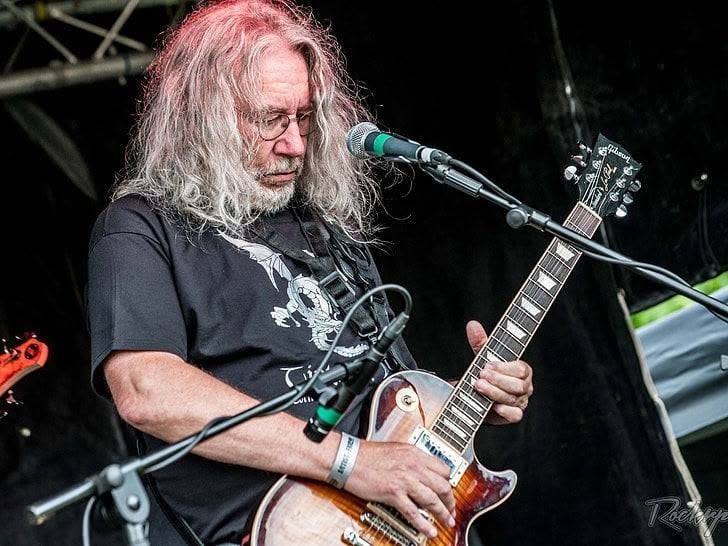
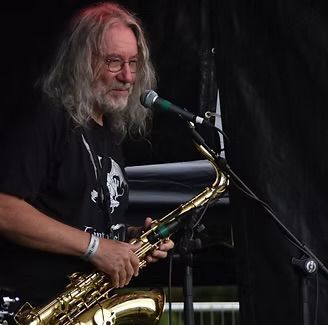
Ally Carter, emeritus professor, guitarist and saxophonist with The Emerald Dawn.
THE EMERALD DAWN are a multi-instrumentalist, symphonic/eclectic progressive music quartet, who combine elements from rock, classical music, jazz, folk and world music to produce their own original, distinctive and exciting sound—a sound that is cinematic, epic, experimental and powerful. This band has a rare gift for songwriting that fills you with dreams and deep emotion; listening to their music gives you goosebumps from start to finish. Someone once wrote that they "put dreams into music," but honestly, the reverse is just as true—they turn music into dreams. And because I absolutely love their latest album ‘The Land, The Sea, The Air Volume II’ it was time to ask (Alan) Ally Carter a few questions:
Arne: The new album is one of my favorites of this year! If you had to describe it in three words, what would they be and why?
Ally: Environmentalist, because the music recognizes the damage humanity has inflicted on the natural environment, and calls for us to work together to try to remedy it.
Visual, because we compose music that is best listened to in the dark, where imagery arises in the mind when immersing oneself in the music. And Pioneering, because (like all our albums) we try to push musical boundaries, often (and certainly in this case) by composing in scales that are rarely, if ever, heard in popular music.
Arne: What was the biggest source of inspiration for this specific album? Was there a particular moment, a book, or an event that sparked it? I read about your scientific background, that must have been an inspiration?
Ally: Probably Donald Trump!!! Before I took early retirement in order to concentrate on music I had been Professor of Philosophy and Environmental Studies. I have also been an environmental campaigner since the beginning of the 1970s, having been involved in Friends of the Earth, Greenpeace and Earth First! Tree has a background in using the performing arts to get across an environmental message. The environmental movement has been working tirelessly for over fifty years to bring in changes. The second Trump administration dismantled most of the hard-won legislative safeguards (far too few and far too minor, but important nevertheless) in a matter of months. An environmental message occurs occasionally in our previous albums, but we thought it was about time we made it explicit and that we pulled no punches.
Arne: Is composing a team effort or do you write individually?
Ally: The finished product is a collective effort. Often the music will begin with a chord progression that Tree has come up with. I often come up with the melodies. David adds his own bass parts. And Tom defines the final rhythms. But how the various parts of the music get joined together is a result of everyone’s input. Sometimes a track will be guided by pre-written lyrics. Once we know what story we want to tell in a track, we then work out how to convey that musically.
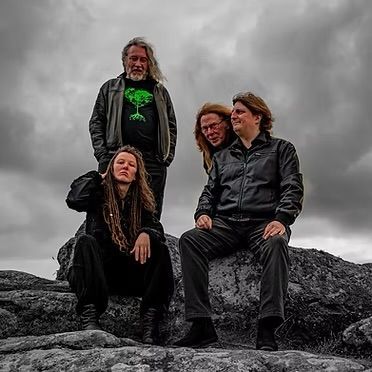
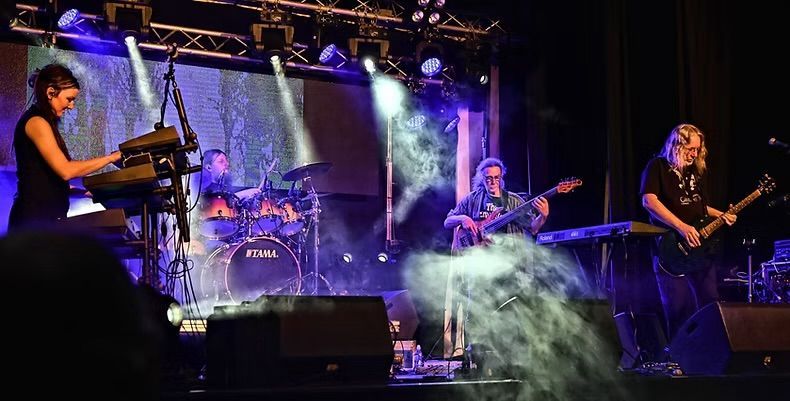
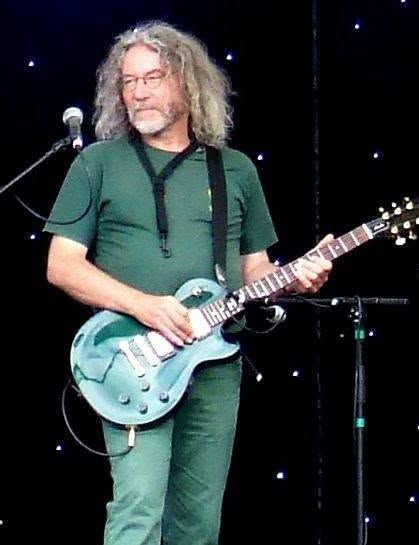
Arne: I’m a bit of a gear freak. What is your absolute favorite instrument to play. You’re multi instrumentalist so that will be a difficult one I guess and is there a special story behind it?
Ally: My favourite instrument is Jade, my green 1998 Gibson Les Paul Studio guitar, because it has the most wonderful growl. But I don’t play it any longer. It is solid mahogany and weighs a ton. Years of playing it has adversely affected my left shoulder. So I now play a new black Gibson Les Paul Studio guitar that has ‘ultra modern weight relief’. In other words, Gibson have found places where they can cut channels and drill holes in the body of the guitar making it about one and a half kilos lighter. My shoulder is extremely grateful.
Arne: Going back to the very beginning: what or who made you pick up an instrument?
Ally: In the late 1960s and early 1970s I listened to a lot of guitar music, with guitarists such as Peter Green, David Gilmour, Carlos Santana... So I bought a guitar and tried to work on how to play it! We also had a wonderful local venue in the North-East of England, in Sunderland to be precise, where I got to see the likes of Free, Traffic, Family, Ten Years After, and so on, and I fell in love with progressive music. Then in the mid-1970s I listened to a lot of modern jazz and jazz-rock fusion. So I bought a tenor saxophone and tried to work out how to play that. I’ve never had a music lesson for any instrument in my life. So there is a sense in which I’m completely self-taught. I say ‘a sense’ because I did read some books on harmony. So I know about scales, how chords are constructed out of them, and so on.
ArneYou also have great live shows, now that the album is out, what are the immediate plans? Can we expect more touring.
Ally: We’ve had 18 gigs this year. We won’t do anywhere near as many in 2027, but we have no plans to stop performing live. All of our music is composed so as to be able to perform it live, and we play without any kind of backing track. We consider ourselves primarily as performing musicians rather than as a studio band. So yes, more touring, but we also need to start composing our eighth studio album.
Arne: Are there specific venues, festivals, or countries where you dream of playing?
Ally: The Emerald Dawn have played twice in the EU: at the ArtRock Festival in Germany last year, and at Festival Crescendo in France this year. We loved playing at both and we would LOVE to play more in the EU. Some gigs in The Netherlands and some in Italy would be a dream come true.
Arne: I always ask: Which artist (living or resurrected) would you love to have a cup of tea with or dive into the studio with?
Ally: Robert Fripp
Arne: What is the strangest or funniest thing you have ever experienced during a performance or in the studio?
Ally: Seeing the audience grow from about 25 to about 600 in the course of an hour… We had played at HRH Prog in Great Yarmouth in the UK the day before, and stayed an extra day to hear some of the other bands. I got a message from Malcolm Galloway of Hats Off Gentlemen It’s Adequate saying that the opening band of the day had suddenly had to cancel and he had been asked to fill in, but the other half of Hats Off Gentlemen It’s Adequate was already on his way back to London, so would I join him on stage for a few solos. I messaged back to ask did he want me to play guitar or sax, and while awaiting his reply a group of people turned up at our caravan door (the bands and most of the audience stayed in caravans) saying that musicians were desperately needed on Stage 2 immediately. We looked at each other, shrugged our shoulders and said ‘Why not’, and rushed over to the stage in our van and set up as much equipment as we could in the 45 minutes before we had to perform. So there we were, Malcolm plus The Emerald Dawn, having no idea what we were going to do and having never played together before. So we just jammed for an hour. Word got round that something was ‘happening’ on Stage 2, and many of the audience left Stage 1 to come and see for themselves. Utterly weird experience. But it was voted in Prog Explorations Plus ‘the surprise of the year’ and has become part of UK prog folklore!
Arne: Which hidden gem (a relatively unknown band, film, or book) do you think our readers really need to discover?
Jack Kerouac, The Dharma Bums
Arne Thanks so much Ally!
Ally: Thanks for putting the questions to me, Arne. A few made me have to think!