
Alex Mari
Alex Mari
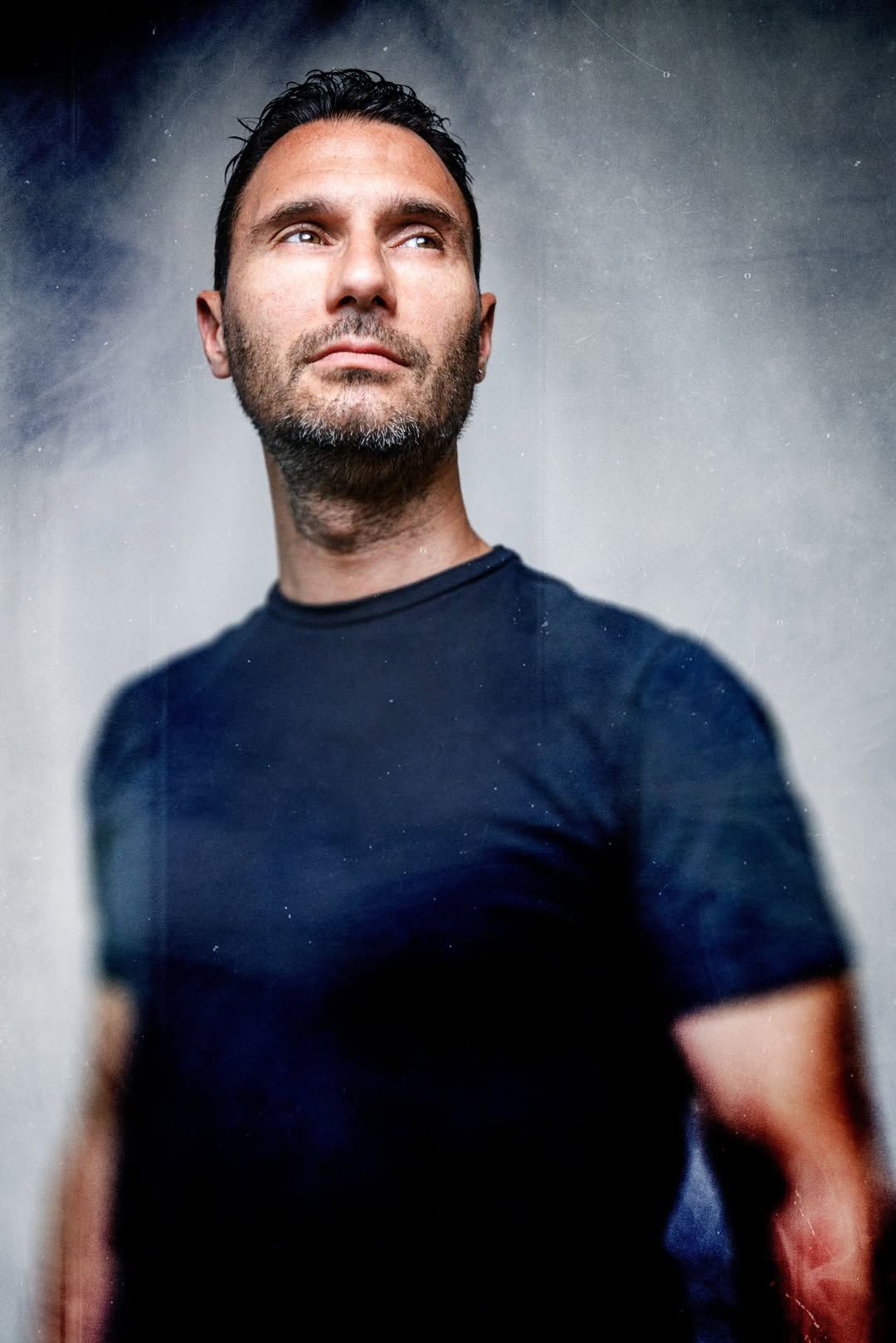
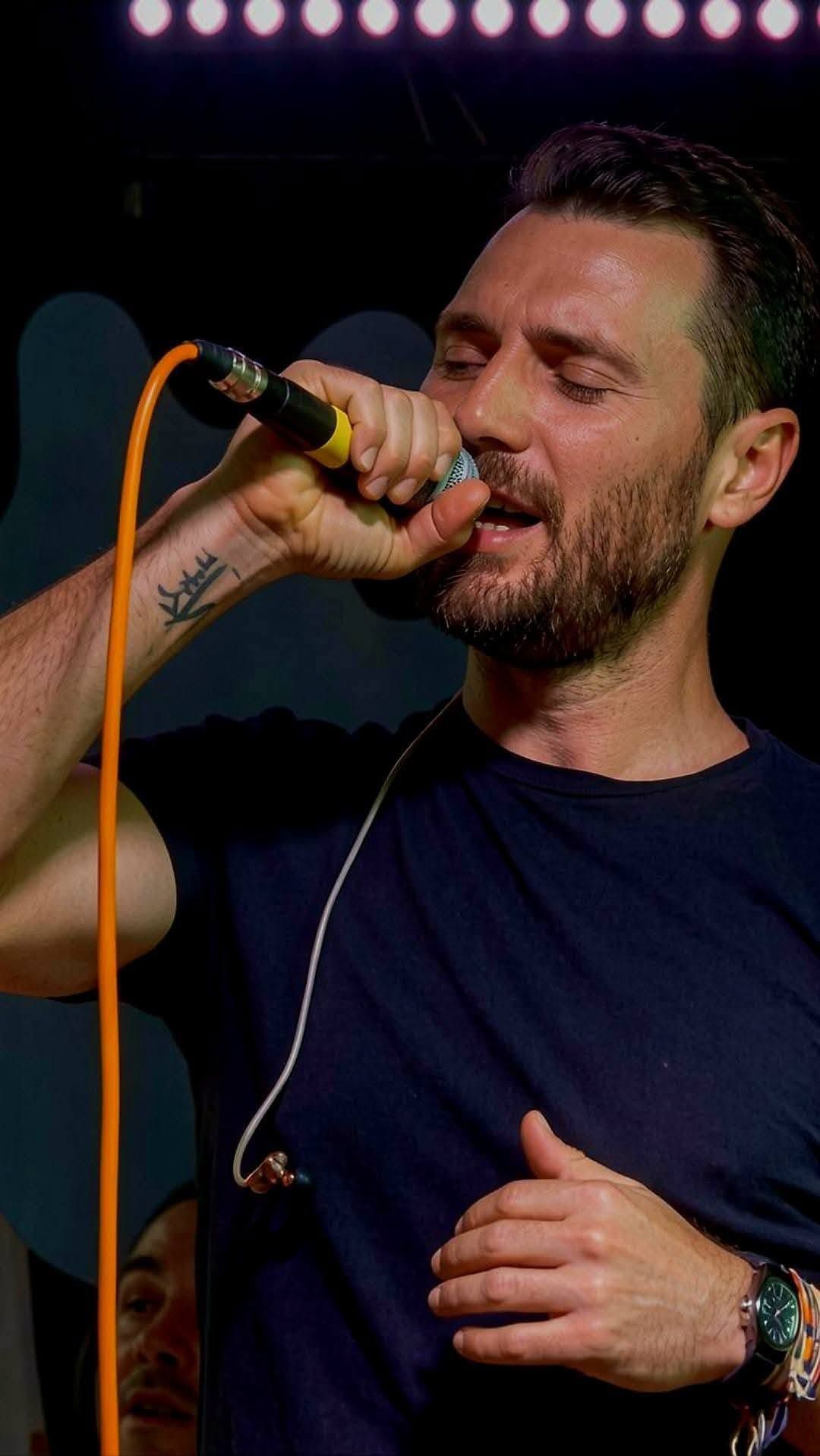
Not just the singer of Barock Project, but a multi instrumentalist and songwriter too! And he just made Origins, a fantastic rock album.
Arne: We know you of course as the singer of Barock Project, but now you produced a wonderful rock album yourself.Congratulations on the new record! If you had to describe the album in three words, what would they be and why?
Alex: Thank you, Arne. That's a good question! I've never thought about it before, but I can tell you:
- The first word is “Origins”, because this album contains most of my first songs, so it's a return to my origins.
- The second is “Dreams”, because I had many different dreams at that time. I wanted to be a musician, to be an artist with my own identity, to be a rock star, to travel the world through music, to meet lots of people, and make new friends. Dreams that I've managed to achieve, at least in part.
- The third word is “Memories”, because most of these songs span a period of approximately 17 years, from 1998 to 2015. I wrote most of these songs between 1998 and 2005, using only my guitar and voice.
I formed a band called O.D.U. at the end of 2002, when I first met my friend Gianluca “Mr. Pisu” Pisana (who is currently the drummer for Night Pleasure Hotel). He was the first musician to believe in my songs. We performed these songs with Italian lyrics from 2002 to 2006. When Gianluca left the band in 2006, we re-formed the band under the name Ophiura and changed the lyrics from Italian to English. Ophiura remained active until 2015. I have so many memories and emotions tied to these songs.
Arne: What was the biggest source of inspiration for the songs on this specific album?
Alex: The biggest sources of inspiration for these songs were my personal experiences and moments that left a mark on my life, such as losing friends, heartbreak, and other difficult times. Other compositions were inspired by dreams, images in my mind, and almost metaphysical visions, as if I were trying to turn a painting I had created in my imagination into music—sometimes exploring spiritual, symbolic, or even apocalyptic themes.
Sometimes it's not really easy to remember exactly all the feelings, sensations, and events that inspired me because these memories are quite far back now, but I decided to record them again because I wanted to give them the love and attention they deserved, giving them a new musical identity and a professional production.
Arne: How does the writing process usually go for you? Does a song originate from a jam session, or does it start at home with a snippet of text on a phone?
Alex: My favorite approach to songwriting is starting with an instrument, usually the guitar or piano, and playing freely for the sheer pleasure of it, without necessarily intending to write a song. Often, while improvising a few chords or singing a melody, I let myself get carried away by the music and, almost without realizing it, new ideas begin to emerge.Other times, especially in the past, I felt a strong urge to pick up an instrument and play, as if something inside me needed to come out and find expression in music. That is precisely how some of my songs were born.
Today, when an interesting idea comes up, I record it on my phone right away so I can develop it later. Sometimes I manage to complete it immediately, while other times I pick it back up weeks, months, or even years later. When I started writing songs in the late 90s, on the other hand, I didn't have the habit of recording them; I would just keep playing and singing them until I memorized them. This allowed me to internalize them more deeply, live them, and truly make them my own.
Over the years, I've experimented with different approaches to songwriting and discovered that, at least for me, creativity can also be stimulated through practice: the more I dedicate myself to creating, the more ideas start flowing. However, thinking back on the songs I've written over the years, the ones that generally convince me the most are precisely those that were born spontaneously, simply by letting myself get carried away by the music.
Arne: You play a lot of instruments on this album. Can you tell me more about them? Only the drums you didn’t do yourself. Why this drummer (an I find it a good one!)?
Alex: The main motivation was the desire to be independent. I didn't want to burden other musicians—who naturally have their own priorities—with commitments, nor did I want to depend on their availability. I wanted to be able to work freely,following my own schedule, without rushing anyone and without slowing down. Furthermore, working alone allowed me to directly develop the ideas I had in mind.
I also took the opportunity to challenge myself: gradually improving my piano skills, playing the guitar more frequently,and diving deeper into the study of arrangements, programming, and VSTs. I wanted to face the difficulties I would encounter during the making of the album head-on, turning them into opportunities to learn something new.
As for the drums, there are actually two drummers on the album: my longtime friend Gianluca “Mr. Pisu” Pisana from Night Pleasure Hotel, and Paolo Caridi, an extraordinary friend and drummer with whom I play in the Michele Luppi Band, who has numerous collaborations and musical projects under his belt. I called these two drummers for several reasons. As I mentioned, Gianluca is a very important person because, besides being a great musician and a very dear friend, he saw these songs being born. Paolo because he is an incredible professional and a wonderful person. He is always very busy, but he gladly accepted to come and record several tracks.
Among the things I would have loved to achieve with this album was bringing together the three drummers (Gianluca,Simone, and Rudy) who, over the years, had been part of O.D.U. and Ophiura. I would have liked to experience this like a dinner among friends—an occasion to reunite and reminisce about the years spent playing these songs together.Unfortunately, due to scheduling conflicts, only Gianluca was able to participate.
Among the other musicians who contributed to the album is Igor Gallerani, the only keyboardist who was ever part of Ophiura. He actually played the main keyboards on “Resurrection,” recorded during the lockdown between March and April 2020. For vocals, I had the pleasure of singing with Leonardo Big_Leo, Valentina Piccinini, and Lisa Cavalieri D'Oro.
Of course, I would have loved for the other guys from Ophiura to be there too—Matteo, Tommaso, and Sebastiano (the latter is also the guitarist for Night Pleasure Hotel)—but as I said before, lining up everyone's schedules would have been the tricky part.
Arne: What is your absolute favorite instrument to play, and is there a special story behind it?
Alex: That is a really difficult question! I've been thinking about it for a while, and believe me, if you asked me again several times over the next three months, I would probably give you a different answer every single time!
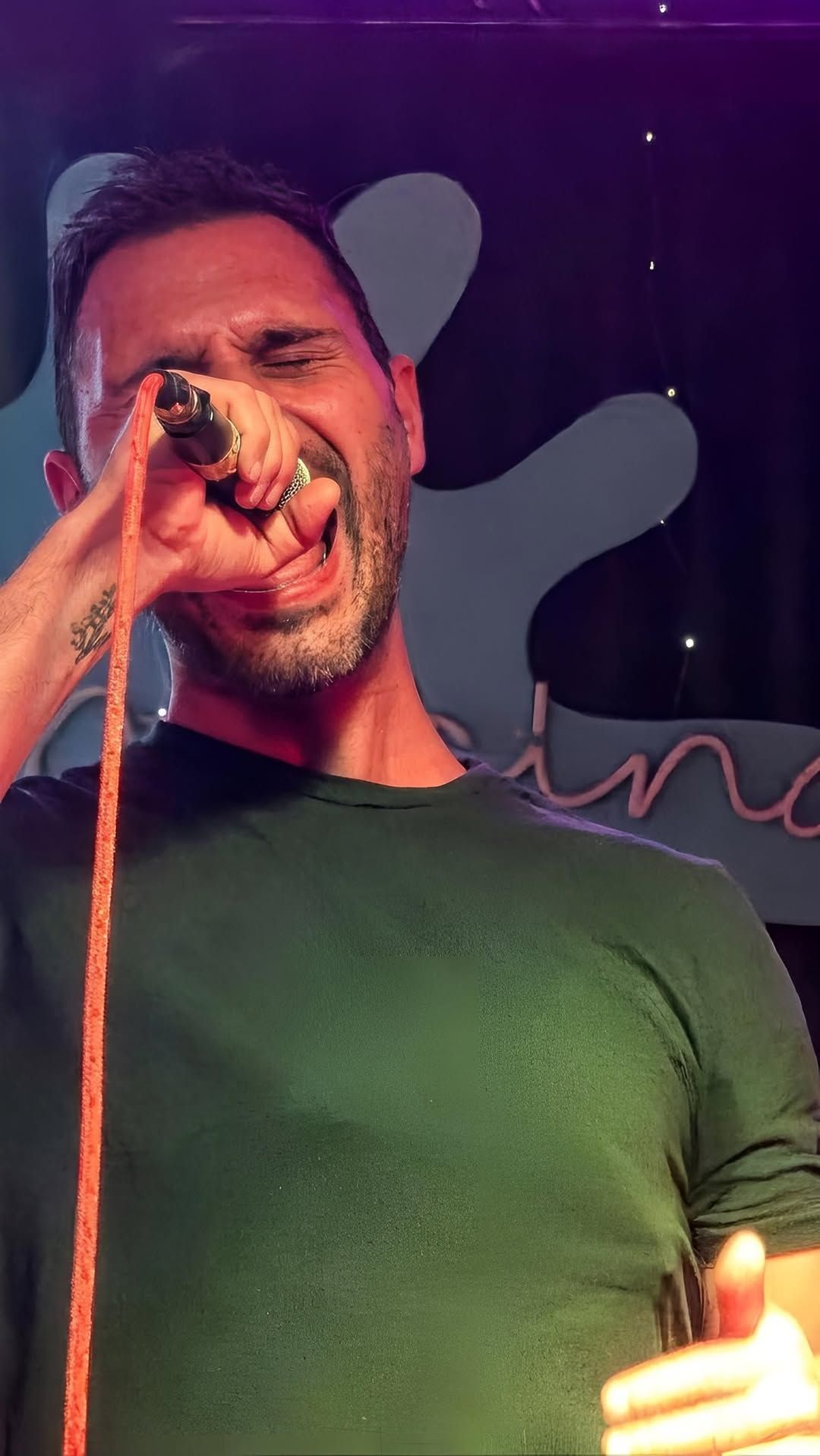
Right now, I'm tempted to say the piano, because I'm rediscovering those wonderful feelings I had 25–30 years ago when I was first learning chords on the guitar. On the other hand, if we are talking about playing live, I'd probably choose the bass—an instrument I underestimated for a long time, which today allows me to play and sing in a rock context without having to overthink things the way I did when I played electric guitar.
But if we are talking about memories and emotions, then I have no doubts: the guitar.
Just now, a memory came back to me that I had almost forgotten. When I was younger, maybe around 13, my parents used to organize dinners or parties with friends, sometimes at the bar in my father's hometown, and other times in an old country building where tobacco used to be dried, which we locally referred to in dialect as the “tabacara”.
During those occasions, I would play my guitar—sometimes the electric one, sometimes the classical—and sing three or four songs terribly. Looking back today, I think those were some of the most wonderful moments of my life.
Arne: Going back to the very beginning: what or who made you pick up an instrument? And I know you’re well educated. Can you tell me more?
Alex: Honestly, I don't remember exactly how my passion for music started. I remember that when I was a child, my grandfather gave me a small toy keyboard, and a few years later I received another one from my father's boss at the company, who later became a dear family friend. In the following years, my parents gave me a classical guitar for Christmas, and later a keyboard. I had fun reproducing the themes of certain songs, even though I didn't really know how to play.
At a certain point, I decided I wanted to learn how to play the guitar, partly because some of my friends and schoolmates had just started doing it. I started as a self-taught musician, learning the first chords and trying to pick up and reproduce songs by ear. Later on, I also received some electric guitars and an electro-acoustic guitar as gifts.
In 1999, I started taking guitar lessons from a private teacher who, incidentally, is also a dear friend of mine, and in 2002 I began attending a private music school, where I later started taking singing classes as well. At the time, however, I still considered myself primarily a guitarist and practiced almost exclusively on the guitar. In 2007, I decided my path would be to become a singer, and I subsequently began studying voice with Michele Luppi.
Starting in 2017, I also attended the conservatory for six years—the first two in Ferrara and the following four in Rovigo,where I graduated in Pop-Rock Vocals, earning my first- and second-level academic degrees. During this journey, I also passed a few piano exams.
In 2014, I started playing bass in my rock trio, Alex Mari and the Lovers, a project that has Night Pleasure Hotel as its alter ego. In recent years, however, I've dedicated myself more to the piano, especially during the creation of Origins and,more recently, in order to play it live with the Queen tribute band.
Arne: Many musicians combine their passion with other jobs or studies. What does your daily life look like when you are NOT working on music?
Alex: When I'm not occupied with my artistic and creative activities—such as writing, producing, and subsequently promoting my work—I still stay within the music industry, working as a vocal coach and as a musician in various formations or even as a solo artist.
Among these, the most notable is MadQueen, the Queen tribute band where I can simply be Alex Mari, without having to impersonate Freddie Mercury and, above all, without having to dress like him. I always like to point that out, hahahaha!
I also really love sports, which I've practiced since I was a child and which at times has become part of my work. I used to play, and still play, in one of the Italian amateur football leagues, alongside various workout routines.
Arne: How do you find the balance between those side activities and the energy needed to make music and tour?
Alex: I believe the most important fuel for me to balance everything is enthusiasm. That's what gives me the energy to carry on with my projects and handle periods when commitments pile up. That's why I try as much as possible to dedicate myself to things I enjoy and genuinely want to do.
Actually, there is another source of energy that pushes me above all to reach my goals: personal retaliation/vindication. I don't want to call it anger, even though it's a little bit of that, but rather self-respect and pride. It functions not so much as a balancing mechanism, but rather as a booster rocket—though if I start talking about that, and I'd gladly do so, I'd go off-topic from your question. However, traces of this latter aspect can actually be found in the song “Letters From Hell.”
Coming back to us, I want to say that I still have the ability to organize my time autonomously, following my own rhythms, without having to respect working hours imposed by an employer. Naturally, this doesn't mean always having free time, because there are still commitments and deadlines to meet.
In all these years, my energy levels have always been very high—aside from a few moments—and I've always managed to balance everything. However, I must admit that the years from 2024 to the present have been the ones where I've felt exhaustion the most. I was already coming off a very intense period divided between the conservatory, work, concerts,and touring, made even more difficult by the passing of my mother in 2023. Added to all this were the creation of Origins, managing social networks, creating content, and promoting the album. I realized I had accumulated a level of fatigue I had never experienced before, and that's why, right now, I'm trying to slow down and recover my energy. I believe finding a balance also means learning to respect one's limits, giving yourself a break when you feel the need, and prioritizing your health.
Arne: Now that the album is out, what are the immediate plans? Also with your other bands?
Alex: As I was telling you before, after a particularly exhausting period, about a week and a half ago I decided to take a short break to recover some mental energy. It was a decision made quite suddenly because I realized I really needed it. So, immediately, I'm going to take a few more days off.
As for upcoming plans, I'd first like to dedicate myself to playing my music—specifically the tracks from Origins and Portraits by Night Pleasure Hotel—as well as the repertoire of Barock Project, with whom we are waiting for the confirmation of some dates for 2027.
Additionally, I'd like to write new songs, and I already have plenty of ideas. Now it's mostly a matter of finding a way to optimize the time and energy available to develop these ideas and handle their production in a sustainable way, especially regarding the management of my energy levels.
Arne: Where do you hope you and your music will be in five years? Are there specific venues, festivals, or countries where you dream of playing?
Alex: In five years, I'd love to be an artist recognized for my own music, with the opportunity to fully dedicate myself to writing, producing, and realizing my original projects and, of course, being able to bring them to major stages—just like I dreamed when I first decided I would become a musician.
The stage I've dreamed of performing on ever since I was a kid is Wembley Stadium! It all stems from the concert that Queen played there in 1986.
When I was a teenager, I played in the youth teams of SPAL, the professional football club from Ferrara. The brother of a teammate of mine, who was a guitarist, had lent me the original VHS tape of Queen's Live at Wembley '86. I had my uncle duplicate it for me, and every single day I would watch that concert, dreaming of being on that stage. It's a dream I've carried with me since I was a kid, and the ultimate peak would be to both sing there and play a game of football on that pitch.
Arne: Which artist (living or resurrected) would you love to have a cup of tea with or dive into the studio with?
Alex: Among living artists, I'd love to have a cup of tea with Brian May or Amy Lee from Evanescence, though I'd probably feel a bit starstruck. Queen and Evanescence are both among my greatest musical loves.
With Queen, there's hardly any need to talk: to me they are immense, and they've truly had a massive influence on my life and my musical tastes. They are among the bands that have had the biggest impact on me.
Evanescence, on the other hand, I watched rise to fame starting right from the release of their first album, which I immediately fell in love with. I remember that while they were still in their twenties becoming famous and their music was becoming part of the lives of so many people—myself included—I had just decided to embark on the path of music and was looking up to them with great admiration. They too deeply influenced my musical tastes, drawing me closer to more aggressive rock sounds and metal. If those influences are part of my music today, it's largely thanks to them.
If, instead, I could bring an artist back to life, I'd have no doubts: Freddie Mercury! I'd love to sit down with him over a cup of tea and listen to his stories.
As for a studio collaboration, I'd love to work with both! And while we're talking about dreams, I'd love to open for Evanescence on tour—perhaps accompanying them on an entire tour—or sing as a backing vocalist for Queen... and maybe pass through Wembley along the way.
Arne: What is the strangest or funniest thing you have ever experienced during a performance or in the studio?
Alex: I don't know if it's the funniest thing that has ever happened to me on stage, but I remember an episode from March of this year that was really amusing to me.
We were playing at Poppodium Boerderij in Zoetermeer, in the Netherlands, with Barock Project, and when we returned to the stage after the break between the first and second halves of the concert, Luca's keyboards suddenly stopped working.
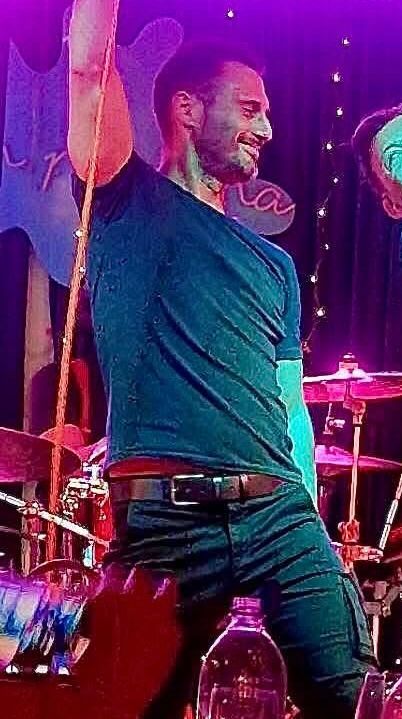
At a certain point, Luca told me: «Buy some time, say something!». So I started improvising, joking with the audience, and at one point I began playing Somebody to Love in an acoustic version. The rest of the band joined in while Luca solved the problem together with the technicians, and the entire audience started singing along with us.
In the meantime, I also started jokingly introducing the band members, including Edoardo Gamberoni, who played bass with us on those dates. I made sure the attention focused especially on him, even explaining to the audience that his surname, translated into English, would be "big prawns", meaning gamberoni!
Naturally, everyone burst out laughing, probably because my expressions and gestures hinted at double entendres. Of course, we laughed too. In the end, fortunately, the keyboards started working again, and we were able to continue the concert.
Arne: Which hidden gem (a relatively unknown band, film, or book) do you think my readers really need to discover?
Alex: It would be far too easy for me to name Barock Project or Night Pleasure Hotel as bands to discover! But since you're giving me the opportunity, I'll gladly take advantage of this space to recommend these bands to your readers—especially Night Pleasure Hotel, which are lesser-known and which I truly believe deserve to be discovered.
I would have liked to suggest something other than my own music, but lately I've mostly discovered bands that are already quite well-known, like Sleep Token, while of the relatively unknown ones I've only listened to a few tracks.
As for cinema, I have to admit I'm not someone who watches a huge variety of films outside of the ones I already love. In recent years, however, I've discovered several very interesting TV series, especially on Netflix and Prime Video.
If you'll allow me, I'd suggest a TV series instead of a film. A Netflix series that struck me in particular is Russian Doll. It's a story that plays with time loops, blending mystery, irony, and existential reflections. I don't know how well-known it is compared to other shows, but I found it really great.
I'm not a huge reader either, but the last book I read and really enjoyed is Antropotech. 30 leggi universali per l'umanesimo tecnologico (“Antropotech: 30 Universal Laws for Technological Humanism”) by Camilla Brossa. The book explores thirty universal laws, relating them to personal awareness and the challenges of an increasingly technological world. I don't know if an English translation exists yet, but it's a read I'd gladly recommend.