
Alan Reed
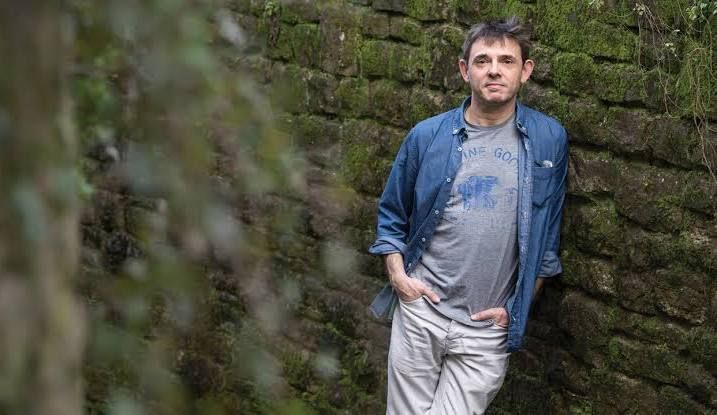
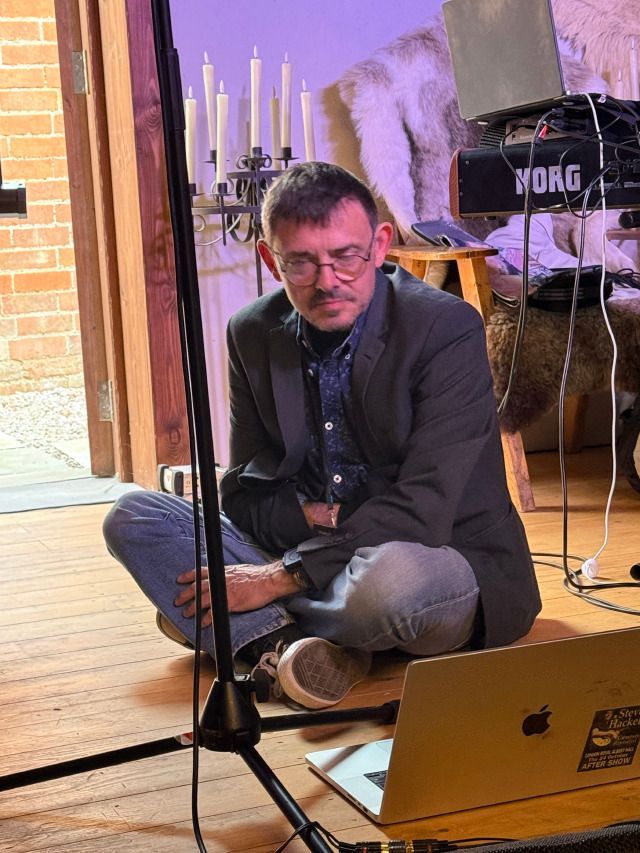
Alan Reed about his solo album, Pallas, his work for the BBC and living with Parkinson's.
Scottish Alan Reed is best known as the singer of Abel Ganz and Pallas. But he also recorded solo albums of which the last one ‘Grey Sky Thinking’ is just released. As is ‘A Song For Tomorrow’ by Pallas on which Alan delivers beautiful vocals. But Alan Reed also worked for the BBC and the UN.
During the recording of the Pallas album Alan was diagnosed with Parkinson’s. Having already lost the ability to play and record guitar, bass and keys, he feared his voice had lost its power and he resolved to finish off his career with a tour of the UK. His final dates included a gig in
Glasgow “Where it all began”. The final date was recorded in both audio and video
with a release set for the end of March 2027. Almost two years since his original
Diagnose.
I had the honour to have a chat with Alan.
Arne: Hi Alan, how are you doing?
Alan Reed: I'm doing as well as can be expected with Parkinson's, but yeah, hanging in there.
It’s really painful, especially in my hand. I’ve lost the cell function on one side of my body, so it’s that whole side affected. It’s awful, but it is what it is. I'm open to talking about it.
Arne: I was blown away by Grey Sky Thinking, your solo album and gave it an amazing review recently. The Pallas album A song for Tomorrow, that came out recently got a good review too, but I have to say your solo album is easily one of the best of the year! The Pallas record is absolutely great and lovely bombastic—and the tracks you sing on are brilliant—but for me there were almost too many different vocalists involved, even though everyone did a great job.
Alan Reed: Yeah, everybody did pretty well, actually. The overall mix and sound came out really good.
Arne: If you had to describe your solo album in a few words, how would you sum it up?
Alan: Well, as we established, it’s very different from the Pallas album. It’s a straightforward rock album—primarily solid, structured songs rather than extended prog pieces.
Arne: It’s a very rich album, I would say.
Alan: Thank you. It took quite a long time to write and record. I’m always searching for genuine inspiration for my songs. One track where that’s very clear is "Sons of the Caliphate".
Arne: Did your background working for the BBC inspire that track?
Alan: At the BBC, my main job was managing and dispatching reporters rather than going out into the field myself, though I spoke daily to people on the ground and covering the courts. So "Sons of the Caliphate" was meant to encapsulate the mindset of people—primarily young people—who were groomed by Islamic State. I reflected on the fact that if I had been young and Black in those specific circumstances, I might have felt drawn to join as well, because it was portrayed to them as the right thing to do.
Arne: Did you write everything on the album yourself?
Alan: Yes, I did. Apart from Mike Stobbie, who brought out some implicit chords in the middle of "First Responder" that I hadn't explicitly written down—for which I gave him credit—it’s all me. I played most of the bass and guitars because it was recorded before I lost the use of my hand.
Arne: It must be heartbreaking not being able to play anymore. I can see some nice basses behind you.
Alan: I have a room full of keyboards, guitars, and basses right back there. I’ve got a Rickenbacker 4001—which is the main bass you hear on the album—along with an Epiphone Thunderbird five-string for the ultra-low stuff, and a Geddy Lee Jazz Bass. I have a complete collection of Telecasters and Precision basses, but nobody is playing them now. It’s frustrating.
Arne: I can only imagine. How has Parkinson's affected your singing voice?
Alan: That’s been the hardest part. I can’t reach the higher register anymore, and I can’t sing with power or volume. I decided to step back before it became too obvious.
Arne: You recently did some farewell concerts. I saw you a few years ago perform in De Boerderij with the Daughters Of Expediency, that was an absolute masterclass!
Alan : Thank you very much! That was a great gig. We actually recorded the entire set, so we have a live track from that show coming out. We also recorded our final gig in Glasgow, so we’re going through that tape to see what we can release.
Arne: I can't wait to hear it! Taking a step back to the beginning: how did you first get into music?
Alan:
I started out as a bass player because I figured there was less competition than on guitar. I played bass and 12-string guitar—basically, I wanted to be Mike Rutherford from Genesis! I had a double-neck guitar (the Sherwood twin-neck that Pallas used early on originally belonged to me).
I initially joined Abel Ganz as a singer to help the band get gigs in Glasgow. But when the opportunity came up to join Pallas, I snapped it up immediately. They were a fantastic band and they needed a frontman.
Arne: And you are a phenomenal singer. To me, your voice sounds like a mix between Fish in his prime, Damien Wilson's high range, and the warmth of John Mitchell—but still uniquely you.
Alan: Thank you! It’s definitely me, singing with a distinct Scottish accent. People often compare me to English singers, but the Scottish phrasing is very much a part of my identity.
Arne: How did your career transition into working for the BBC?
Alan: When I left Pallas the first time around in 1988/1989, I moved to London. I applied for a job at the BBC as a sound engineer. After a great first interview, there was a mix-up with the scheduling of the second interview, and by the time we spoke again, the position had been filled. I moved back to Scotland, but out of the blue, they tracked me down when another position opened up. I joined the BBC and eventually shifted to becoming a producer. When I rejoined Pallas in 1993, I was already transitioning into news gathering. Later, I joined the Home Affairs Unit, which I was running by the time I left.
Arne: That’s an incredible secondary career to be proud of. Did that journalistic background heavily influence your songwriting?
Alan : Not directly, but you can’t be exposed to so many grim real-world events without it shaping who you are. For instance, "First Responder" is about the police, fire service, and paramedics—the people who run toward danger while everyone else runs away. So many of them end up with PTSD, addiction, or broken families as a result. I was thinking specifically of 2017 when the UK suffered four terrorist attacks in quick succession.
Arne: And now you’re navigating life with Parkinson’s.
Alan: Every day is a new experience. I have good days and bad days. Some days I feel great, and other days I don't even want to get out of bed. But it is what it is. Beyond the physical impact, it affects the brain—you lose some of your mental filters and control mechanisms.
Arne: But you’ve been doing sponsored long-distance walks, right?
Alan: Yes! Last year, my partner and I walked the West Highland Way, which is something I’d wanted to do since I was a kid. She suggested raising money for Parkinson's research, and we managed to raise £7,000.
And later, we walked coast-to-coast across Scotland from Glasgow to Edinburgh along the canals because it was flat and manageable. Truthfully, I couldn't walk the West Highland Way today—that’s how much my physical condition has declined in just one year. But doing these walks for charity has been hugely rewarding.
Arne: Are you still composing or writing music behind the scenes?
Alan: At the moment, I don't have plans beyond Christmas. My main focus is getting these album releases out. Maybe I’ll get itchy feet later on, but right now, writing and playing are very difficult.
Musicians usually break the rule of retiring—they usually play until they drop! But I’m breaking that rule, and I’m okay with it. I’ve had a wonderful career, travelled, and met amazing people.
Arne: If this solo record turns out to be your final album, you certainly went out with a bang! The musicianship is top-tier. I’m a fan of the drumming by Henry Rogers.
Alan: Having Henry Rogers on drums was fantastic. He’s played with me live for years, but we finally got him recorded in the studio just before the lockdown. Tudor—who works on BBC's Later... with Jools Holland—specced out the studio setup and microphones for us, so Henry was able to track everything brilliantly.
Arne: I always like to ask a couple of fun, lighter questions. If you could sit down for a cup of coffee with any artist, who would it be?
Alan Reed: Peter Gabriel, without a doubt. He’s done everything. He was in Genesis early on, but then completely evolved and moved away from it. I’d love to just sit down with him and understand how his mind works.
Arne: What about crazy or memorable moments on stage?
Alan: In the early days of Pallas, we used flash pyrotechnics. I remember playing a tiny stage where the pyro was set up right in front of the drum riser. When they went off, it looked like I exploded! I ended up with powder burns all over my bare torso. Another time at the Aberdeen Music Hall, a leaking smoke machine dripped fluid onto the wooden stage steps, and the pyrotechnics set the steps on fire mid-show! The roadies were trying to extinguish the fire with gaffer tape.
Arne: Do you have a "hidden gem" recommendation for a book, movie, or band?
Alan Reed: Book-wise, The Buddha of Suburbia by Hanif Kureishi. It’s a brilliant exploration of growing up between two cultures in 1960s to 1980s Britain. Moving from Scotland to London, a lot of those themes about identity resonated with me. It’s also a fantastic piece of social history.
Arne: What are your future plans now?
Alan: I’m fully retiring from work. After leaving the BBC staff five years ago, I freelanced for them and worked with NGOs on the UN campus in Dubai for COP28 as a client liaison. But I’ve had to step back from all of that now. One day, I might write a book about my life.
Arne: You definitely should! You could easily use voice-to-text transcription software to write it.
Alan: That’s very true! Maybe next year.
Arne: Alan, thank you so much for this conversation. I really appreciate your time. Your solo album is guaranteed a spot in my top 10 of the year—the emotion in your vocals gives me goosebumps every time.
Alan: Thank you very much, Arne! I didn't realize it at the time, but that record was the last time I was able to sing with that kind of power. I really appreciate your support.
Arne: I wish you all the best and the best health possible.
Alan: Thank you, take care!